Car accessories divide cleanly into two groups: things that make driving marginally nicer, and things that stop a bad day becoming a much worse one. The second group is small, cheap and boring, and it is where the top of this list sits.
Everything here is ordered by consequence. A jump starter matters once every few years and matters enormously on that day. A cup holder insert never matters. Both get sold with the same enthusiasm.
One note on legality that varies by country: rules on what may obstruct your windscreen, whether dashcams may record audio, and what safety equipment you are required to carry all differ. Check your local rules rather than assuming — several items here are mandatory in some countries and restricted in others.
Prices are approximate at the time of writing.
The short version
A lithium jump starter
The one that rescues a bad day
Disclosure. The links on this page are affiliate links. If you buy through one we may earn a commission at no extra cost to you. It does not affect what makes this list or the order it is in.
How we picked
We rank by consequence — what a thing saves you on the worst day it is needed. We rely on published testing, safety standards and long-run owner reports, and we have not personally used every item here. Where local law varies we say so rather than giving advice that only applies in one country.
At a glance
Prices are approximate at the time of writing and change often.
The picks
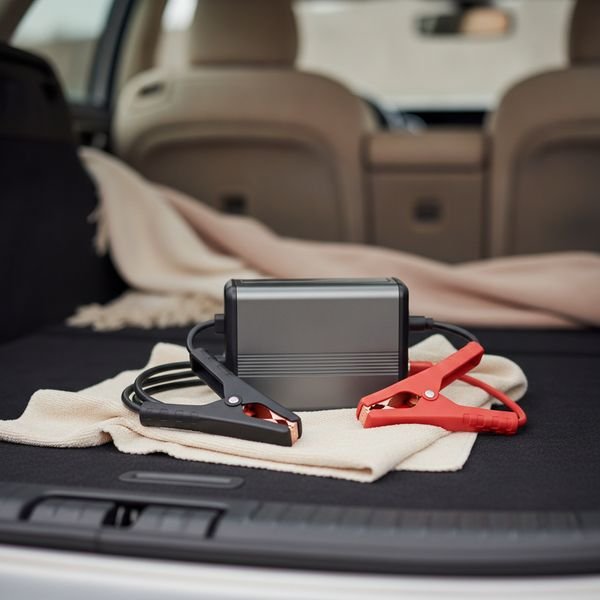
01 · The one that rescues a bad dayA lithium jump starter
A flat battery used to mean waiting for someone kind with jump leads, and a modern lithium pack the size of a paperback removes that dependency entirely. It also doubles as a large power bank, so it earns its space rather than just occupying it. Match the peak amp rating to your engine — petrol engines need less than diesels, and a unit rated for a small hatchback will not turn over a large diesel. Charge it every three to six months, because the one guaranteed way for this to fail you is to be sitting flat in the boot when you need it.
$70–150Trade-off: Useless if you forget to charge it
Why it is here
- Removes dependence on a passing stranger
- Doubles as a large power bank
- Small enough to live in the boot permanently
Worth knowing
- Useless if you forget to charge it
- Amp rating must match your engine size
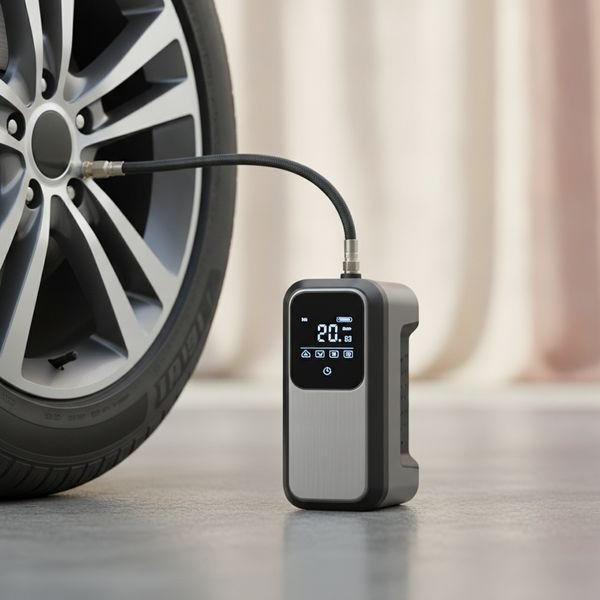
02 · Safety and fuel economyA tyre inflator with a pressure gauge
Under-inflated tyres wear faster, use more fuel, handle worse and are more likely to fail — and almost nobody checks them monthly as recommended, because it means a trip to a garage forecourt. A compressor in the boot removes that friction, so it actually happens. Get one with a digital preset that shuts off automatically at the target pressure; the ones you have to watch get used once. Check pressures cold, before driving, since a warm tyre reads high. Note this handles slow punctures and low pressure, not a blowout.
$40–90Trade-off: Read pressures cold or they are wrong
Why it is here
- Removes the friction that stops people checking
- Auto shut-off means you can walk away
- Pays for itself in tyre life and fuel
Worth knowing
- Read pressures cold or they are wrong
- Not a solution for a blowout
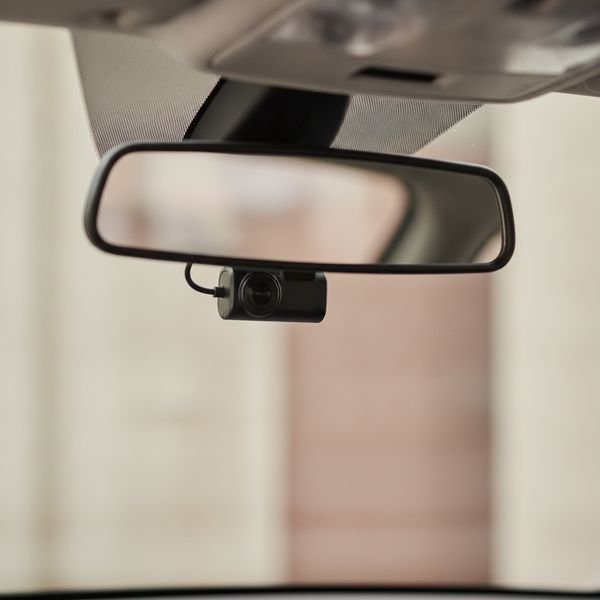
03 · Insurance you hope never to useA dashcam with a parking mode
The value of a dashcam is entirely in the one disputed incident where footage settles who did what. Buy one with a capacitor rather than a lithium battery, because a car interior in summer gets hot enough to degrade and swell a battery. 1440p is the practical minimum to read a number plate at distance, which is the whole point. Two things to check locally: some countries restrict recording audio inside the car, and several regulate where a device may sit on the windscreen. Parking mode needs hardwiring to work properly.
$90–250Trade-off: Audio recording and placement are regulated in some countries
Why it is here
- Settles disputed incidents definitively
- Capacitor models survive summer heat
- Parking mode captures car park damage
Worth knowing
- Audio recording and placement are regulated in some countries
- Parking mode needs hardwiring
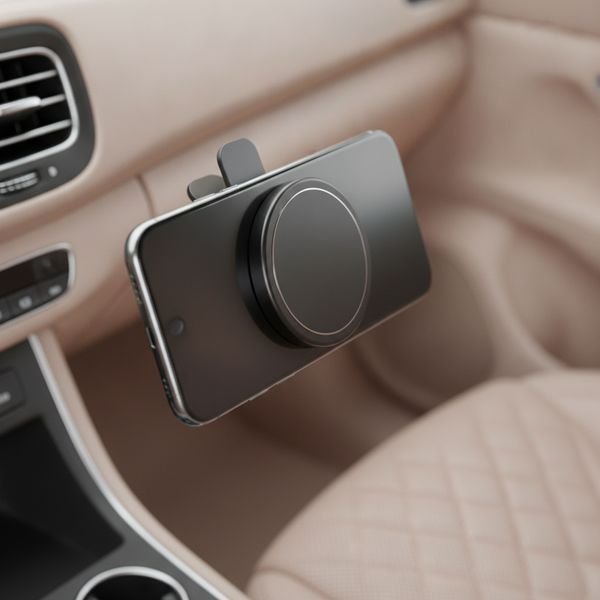
04 · Safety, not convenienceA magnetic or vent phone mount
Handling a phone while driving is illegal in most places and dangerous everywhere, and a mount at eye line means navigation becomes a glance rather than a look down into your lap. Magnetic mounts dock one-handed, which matters because a mount that needs two hands to operate defeats its own purpose. Position it so it does not obstruct your view of the road — windscreen placement is regulated in several countries. If your phone has a magnetic ring built in, use a mount that engages it; otherwise a metal plate under the case works fine.
$20–45Trade-off: Windscreen placement is regulated in some countries
Why it is here
- Keeps your eyes near the road
- One-handed docking
- Cheap for what it prevents
Worth knowing
- Windscreen placement is regulated in some countries
- Vent mounts sag on soft vanes
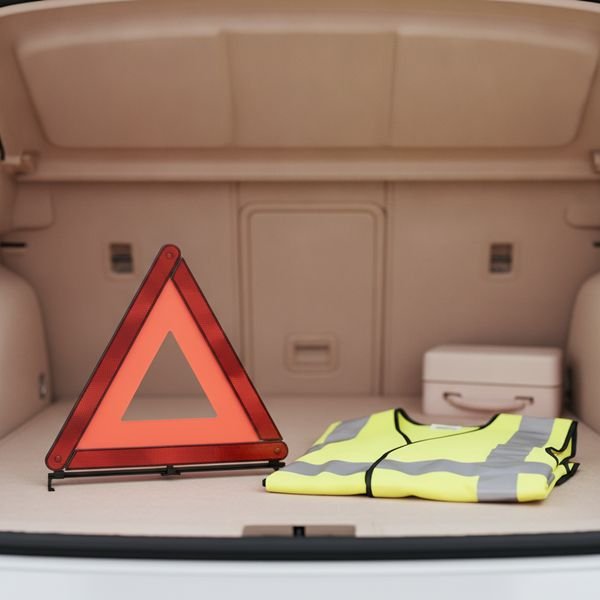
05 · Often legally requiredA reflective warning triangle and hi-vis vest
In many countries these are not accessories, they are legally required equipment, and in several you can be fined for not carrying them. Beyond the legal point, standing on a verge at night in dark clothes is genuinely one of the more dangerous things a driver ever does, and a vest changes how far away you are visible by a very large margin. Keep the vest in the cabin rather than the boot — the moment you need it is before you get out of the car, not after you have walked around to the back of it on a live carriageway.
$15–35Trade-off: Useless in the boot — keep the vest in the cabin
Why it is here
- Legally required in many countries
- Dramatically increases how far away you are seen
- Costs almost nothing
Worth knowing
- Useless in the boot — keep the vest in the cabin
- Requirements vary between countries
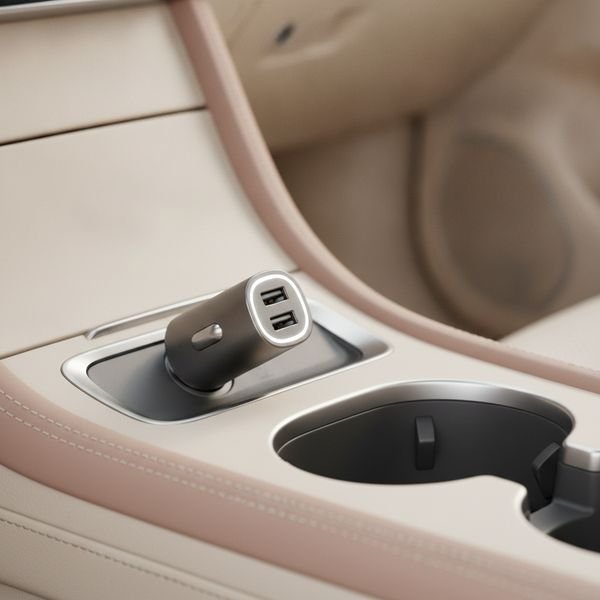
06 · Where cheap is a real riskA proper car phone charger
The socket chargers sold at petrol stations are among the worst-made electronics anyone buys, and they sit permanently in a powered socket in an enclosed space where nobody would notice them overheating. A branded USB-C power delivery unit charges a phone at full speed while navigation and the screen are both running — which a cheap one cannot manage, so your battery slowly drains while it is plugged in. That is a genuinely common and confusing complaint, and the charger is almost always the cause rather than the phone. Look for a recognised safety certification mark on the body itself, not just the packaging. Two ports is worth the small premium, because the passenger will always ask, and older cars may not supply enough current to run both at full speed anyway.
$18–40Trade-off: The cheapest units are a genuine safety risk
Why it is here
- Actually charges while navigation runs
- Branded units carry real safety certification
- Two ports for the price of one
Worth knowing
- The cheapest units are a genuine safety risk
- Older cars may not supply enough current
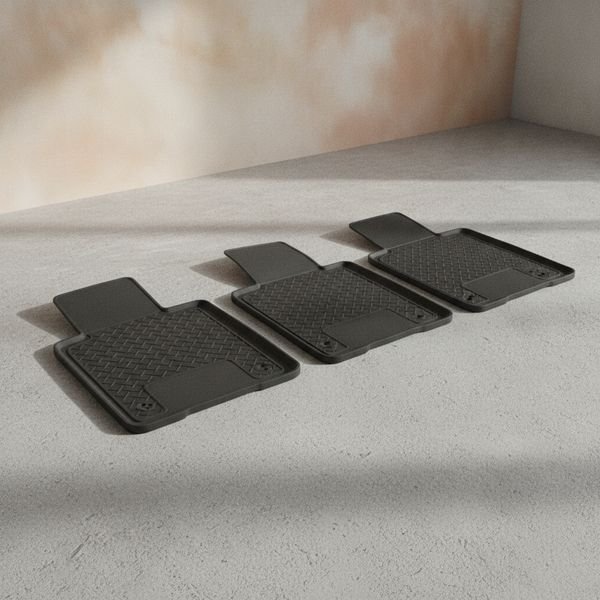
07 · Protects resale valueAll-weather rubber floor mats
Carpet in a footwell absorbs everything and never fully recovers, and a stained interior takes a real bite out of what a car sells for. Rubber mats with a raised lip contain mud, snowmelt and spilled coffee, and they hose off in a minute. Buy mats cut for your specific model rather than universal ones — the universal type slides forward and can foul the pedals, which is a genuine hazard and the reason retaining clips exist. Check yours sit on the factory anchor points and cannot creep.
$60–150Trade-off: Universal mats can slide and foul the pedals
Why it is here
- Protects resale value meaningfully
- Hoses clean in under a minute
- Contains snow, mud and spills
Worth knowing
- Universal mats can slide and foul the pedals
- Model-specific sets cost more

08 · Stops everything rollingA boot organiser
A collapsible fabric organiser with dividers keeps shopping upright and stops loose items sliding across the boot on every roundabout, which is the noise everyone recognises. The ones with a non-slip base or velcro strips actually stay put; the ones without slide around and become part of the problem they were bought to solve. It also folds flat in seconds when you need the full boot for something large. This is a comfort item rather than a safety one, but it earns its place by being used on every single shopping trip.
$30–60Trade-off: Without a non-slip base it slides too
Why it is here
- Shopping arrives upright
- Folds flat when you need the full boot
- Used on essentially every trip
Worth knowing
- Without a non-slip base it slides too
- Takes up space when not needed

09 · Cheapest visibility improvementA microfibre cloth set and a screen wipe
The film that builds up on the inside of a windscreen scatters oncoming headlights and low sun badly, and most drivers only notice how bad it was after cleaning it. A couple of microfibre cloths kept in the door pocket cost almost nothing and improve night visibility more than any bulb upgrade. Keep one cloth for glass and a separate one for everything else, because a cloth that has touched dashboard polish will smear glass persistently. Wipe the inside of the windscreen roughly monthly and you will notice the difference the first time you drive into low sun.
$12–25Trade-off: A polish-contaminated cloth smears glass badly
Why it is here
- Improves night visibility for almost nothing
- Better return than a headlight upgrade
- Takes two minutes a month
Worth knowing
- A polish-contaminated cloth smears glass badly
- Needs washing separately from other laundry
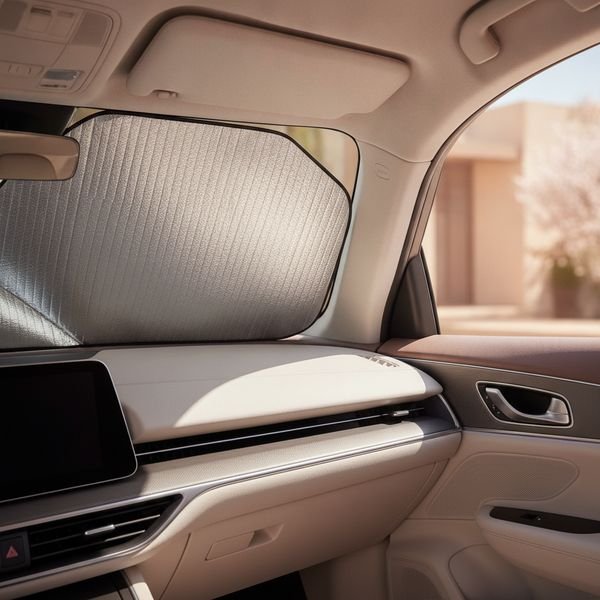
10 · Small thing, hot climatesA sunshade for the windscreen
In a hot climate a parked car reaches temperatures that make the first ten minutes of any journey unpleasant and that visibly degrade a dashboard over a few summers — cracking, fading and warping are largely a UV and heat story. A reflective shade cuts the worst of it for the price of a couple of coffees. The concertina-folding type is far easier to store and deploy than the twist-to-fold spring type, which everyone struggles with. Measure your windscreen; a shade that is too small leaves a hot strip across the dashboard and does half a job.
$20–45Trade-off: Spring-fold types are awkward to put away
Why it is here
- Noticeably cooler cabin on return
- Slows UV damage to the dashboard
- Cheap
Worth knowing
- Spring-fold types are awkward to put away
- An undersized shade leaves a hot strip
Common questions
What should live in the boot permanently?
A jump starter, a tyre inflator, a warning triangle and a hi-vis vest — with the vest in the cabin rather than the boot. Those four cover the situations where being unprepared costs you a whole day.
Are dashcams legal everywhere?
The camera usually is, but recording audio inside the vehicle and where you may mount a device on the windscreen are regulated differently between countries. Check your local rules before fitting one.
How often should I check tyre pressure?
Monthly, and before any long trip, always on cold tyres. It is the single most neglected piece of routine car maintenance and it affects safety, fuel use and how long the tyres last.
What car accessory is not worth buying?
Air ionisers and most 'purifying' gadgets, seat massagers, and universal-fit floor mats — the last of those is actively unsafe if it slides into the pedals. Model-specific mats cost more and are the only ones worth having.
Today's deals
See what is discounted right now.
Deals →← All guides
As an AliExpress affiliate we earn from qualifying purchases. Prices and availability are accurate as of the date of publication and may change.