Every item you pack has a carrying cost, paid in weight, in bag space, and in the small tax of having one more thing to keep track of. Most travel gadgets fail that test — they solve a problem you meet once a year, and you carry them the other fifty-one weeks.
The items below survive it. Several are boring. A couple are things you already own in a worse version, and one of them is a plastic bag, which we are aware is not an exciting recommendation but happens to be correct.
Prices are approximate at the time of writing, and luggage in particular is discounted heavily and often — paying full price for a suitcase is close to a mistake.
The short version
Packing cubes
Changes how packing works
Disclosure. The links on this page are affiliate links. If you buy through one we may earn a commission at no extra cost to you. It does not affect what makes this list or the order it is in.
How we picked
We judge travel gear on weight, durability under airline handling, and how many trips a year it actually earns a place on. We rely on published testing, long-run owner reports and airline rules current at the time of writing, and we have not personally travelled with every item here. Where the popular choice is the wrong one, we say so and explain the trade-off rather than quietly leaving it off the list.
At a glance
Prices are approximate at the time of writing and change often.
The picks
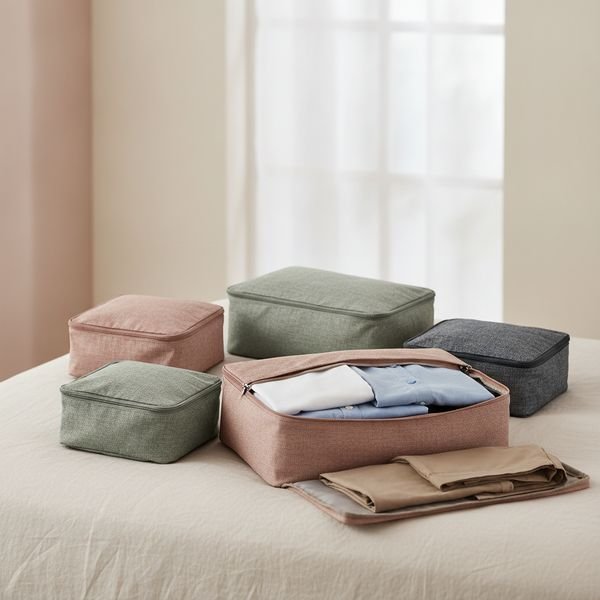
01 · Changes how packing worksPacking cubes
Cubes do not really save space — the compression ones save a little, and the rest mostly just contain things. What they change is the experience of living out of a bag. Your clothes stay sorted for the whole trip instead of collapsing into a pile after the first morning, you can find one shirt without unpacking everything, and repacking takes two minutes rather than twenty. On a multi-stop trip that difference is enormous. Buy a small number of larger cubes rather than many small ones, and use one as the dirty laundry bag.
$25–50 for a setTrade-off: Space saving is smaller than advertised
Why it is here
- Keeps a bag organised across a whole trip
- Repacking becomes a two-minute job
- One cube doubles as a laundry bag
Worth knowing
- Space saving is smaller than advertised
- Adds a little weight of its own
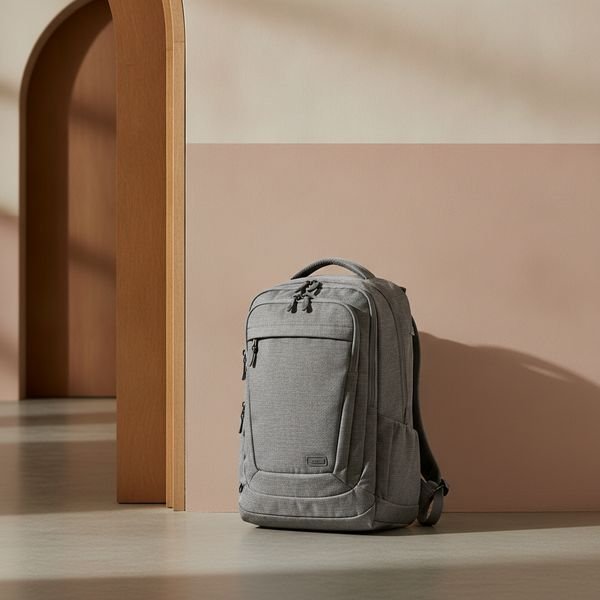
02 · The bag that skips baggage claimA 40L carry-on backpack or soft-sided cabin bag
Travelling carry-on only removes the two worst parts of flying: waiting at the carousel and the possibility your bag went to a different country. A 40L clamshell bag that opens flat like a suitcase is the format to look for, because top-loading rucksacks make you unpack everything to reach the bottom. Check your airline's dimensions before buying, and check them again for budget carriers, which have both smaller limits and far more enthusiasm for enforcing them. The trade-off is honest: you will carry the weight on your back rather than rolling it.
$100–250Trade-off: You carry the weight rather than roll it
Why it is here
- No baggage claim, no lost luggage
- Clamshell opening works like a suitcase
- Fits budget-airline limits if sized correctly
Worth knowing
- You carry the weight rather than roll it
- Cabin size limits vary by airline — verify first
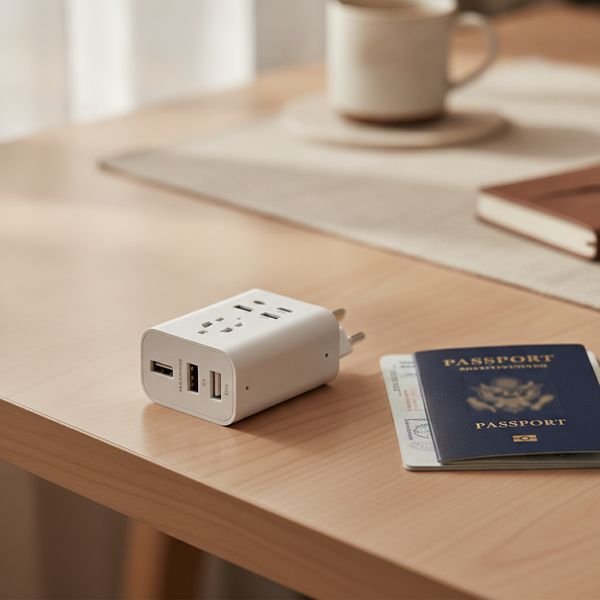
03 · Buy one good one, not three cheap onesA universal travel adapter with USB-C PD
The cheap adapters sold at airports are the ones that get warm, lose contact when you nudge the cable, and occasionally fail in ways you would rather not think about while asleep in a hotel room. A good one has proper fusing, holds a plug firmly, and — the part that actually matters now — includes USB-C power delivery at 30W or more, so it charges a laptop directly and replaces a second charger entirely. Note that almost none of these convert voltage; they change the plug shape only. Check your hairdryer or shaver is dual voltage before you rely on one.
$30–60Trade-off: Does not convert voltage, only the plug shape
Why it is here
- Replaces your laptop charger as well
- Safe fusing and a firm plug grip
- One item covers most of the world
Worth knowing
- Does not convert voltage, only the plug shape
- Bulky in a small day bag
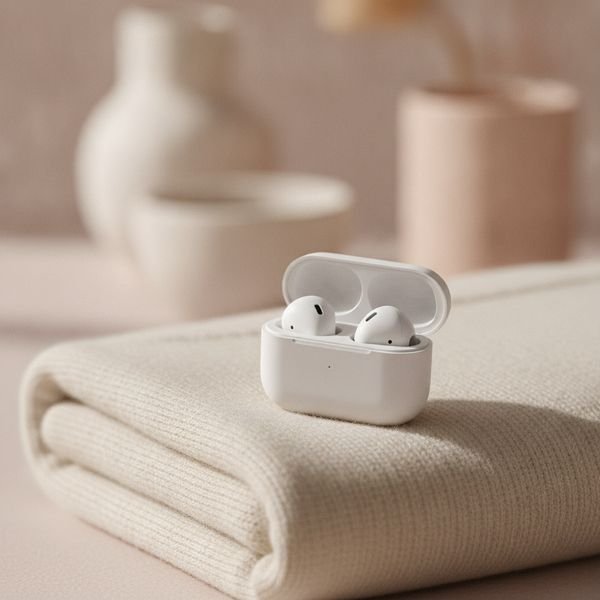
04 · Best for long flightsNoise cancelling earbuds
On a long flight, cancelling the engine drone is the difference between arriving tired and arriving wrecked, because the constant low-frequency noise is genuinely fatiguing even when you are not conscious of it. Earbuds win over full-size headphones for travel specifically: they fit in a pocket, they work lying sideways against an aeroplane seat, and there is no headband fighting a neck pillow. Over-ears cancel slightly better and have longer battery, so if flights are the main use and you sleep upright, they are the reasonable alternative. Take a wired backup for older in-flight entertainment systems.
$120–300Trade-off: Less cancellation and battery than over-ears
Why it is here
- Cuts the fatigue of engine noise
- Pocketable, and work lying on your side
- No conflict with a neck pillow
Worth knowing
- Less cancellation and battery than over-ears
- Easy to lose one — they are very small
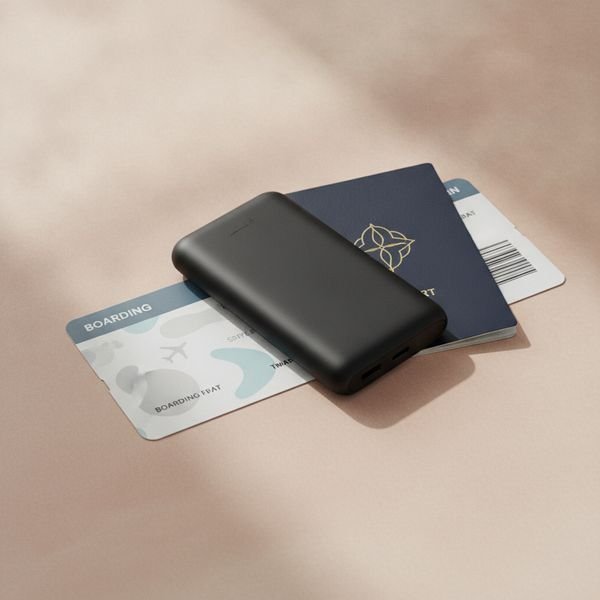
05 · Check the airline ruleA slim power bank under 100Wh
A 10,000mAh bank is the practical sweet spot for travel: roughly two phone charges, thin enough to hold together with your phone, and comfortably inside the limits airlines set. The rule to know is that lithium batteries must travel in your cabin bag, never in checked luggage, and anything above 100Wh generally needs airline approval. Almost all 10,000mAh banks are around 37Wh, so they are fine, but a large laptop bank may not be. Several airlines have also tightened rules on using or charging them in flight — check your carrier before you travel.
$30–60Trade-off: Must go in cabin baggage, never checked
Why it is here
- About two phone charges in a pocketable size
- Comfortably within airline limits
- Cheap and widely available
Worth knowing
- Must go in cabin baggage, never checked
- In-flight use rules are tightening — check first
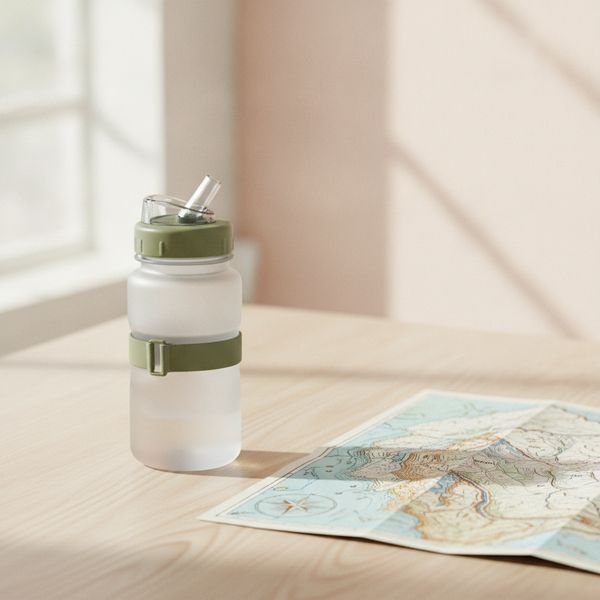
06 · Pays for itself in a weekA refillable water bottle that folds or packs flat
Airport water prices are the clearest illustration of a captive market there is, and a bottle you take through security empty and fill on the other side sidesteps it entirely on every trip you ever take. A collapsible one solves the objection that a rigid bottle takes up bag space when empty — it rolls to the size of a fist. The genuine caveats: tap water is not safe to drink everywhere, so check your destination rather than assuming, and soft bottles are harder to clean properly, which matters if you put anything but water in them.
$20–40Trade-off: Tap water is not drinkable everywhere
Why it is here
- Sidesteps airport water pricing entirely
- Rolls down to fist size when empty
- Cheap, and useful on every single trip
Worth knowing
- Tap water is not drinkable everywhere
- Soft bottles are harder to clean thoroughly
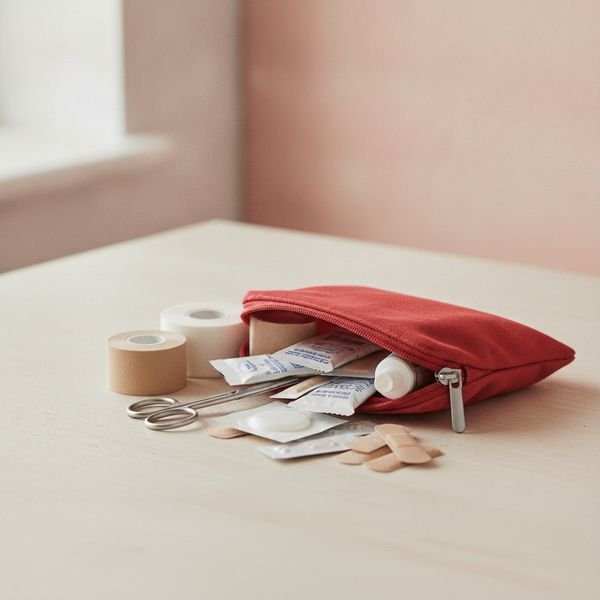
07 · The one you hope stays unusedA compact first aid and medication kit
Buying paracetamol at 2am in a country where you do not speak the language and the packaging is unfamiliar is a genuinely miserable experience, and it is entirely avoidable with a pouch that weighs two hundred grams. Blister plasters alone justify the whole thing on any trip involving walking. Keep prescription medication in its original labelled packaging and carry it in your cabin bag, and check the rules for your destination before you travel — some common medicines, including certain painkillers and cold remedies, are restricted or banned in particular countries.
$20–45Trade-off: Some medicines are restricted in some countries
Why it is here
- Blister plasters alone justify carrying it
- Avoids navigating a foreign pharmacy at night
- Very light for what it covers
Worth knowing
- Some medicines are restricted in some countries
- Needs checking and restocking between trips
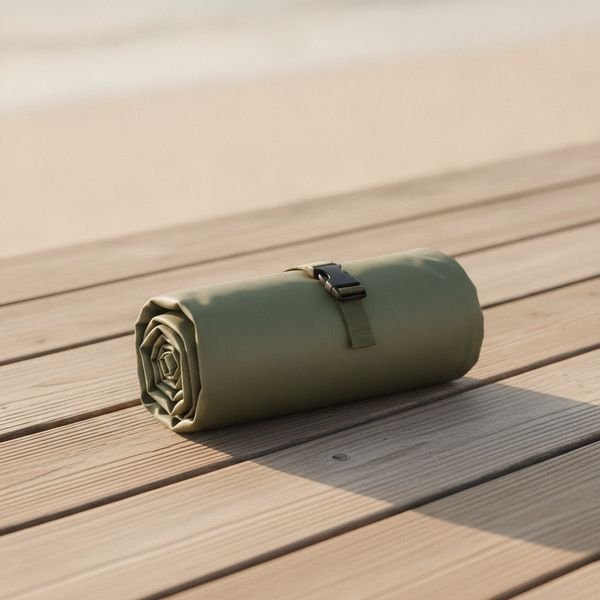
08 · Cheapest insurance you can packA dry bag or heavy-duty plastic bag
We are aware this is not a thrilling recommendation. It is on the list because a single leaking bottle of shampoo, one unexpected downpour, or one boat transfer with spray coming over the side can ruin electronics, documents and every item of clothing you brought. A roll-top dry bag weighs almost nothing and removes that entire category of trip-wrecking event. A sturdy zip-lock bag does eighty percent of the same job for nothing at all, which is why the price starts at zero and we would not think less of you for taking that option.
$0–20Trade-off: Genuinely boring
Why it is here
- Protects documents and electronics completely
- Weighs almost nothing
- The free version works nearly as well
Worth knowing
- Genuinely boring
- Roll-top closures need doing properly to seal
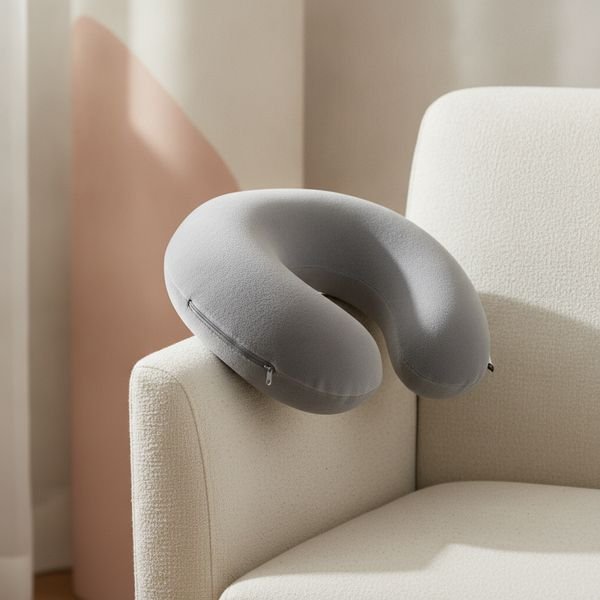
09 · Most get this wrongA neck pillow — the right kind
The inflatable horseshoe sold at every airport is close to useless, because the problem on a plane is not your head falling backwards — the seat already stops that. It is your head falling sideways. So the pillows that work are the firm ones that fill the gap between your shoulder and your jaw, or the wrap-around designs that support the chin. Memory foam is bulkier to carry than inflatable, and that is the real trade-off. If you only fly short-haul, skip this entirely and put a folded jumper against the window instead.
$30–70Trade-off: The common inflatable horseshoe barely works
Why it is here
- The right design genuinely helps you sleep upright
- Firm foam supports sideways head fall
- Useful on trains and coaches too
Worth knowing
- The common inflatable horseshoe barely works
- Bulky to carry for what it does
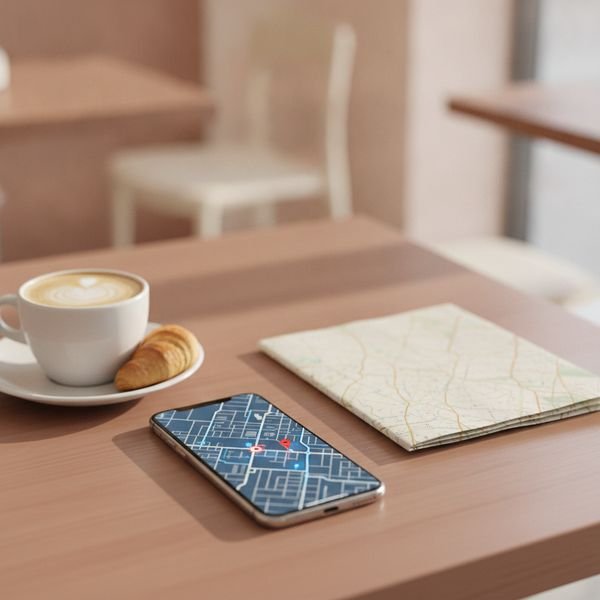
10 · Biggest money saved on this pageAn eSIM instead of roaming
This is not a physical product, which is exactly why it belongs here — it replaces the fiddly business of buying a local SIM on arrival and the far worse business of paying your home carrier's roaming rates. You buy a data plan online before you fly, install it in about two minutes, and land connected. Two things to verify first: that your phone actually supports eSIM, which most models from the last few years do, and that it is not carrier-locked. Keep your normal SIM active for calls and messages, and run the eSIM for data only.
$5–25 per tripTrade-off: Needs an eSIM-capable, unlocked phone
Why it is here
- A fraction of roaming charges
- Connected the moment you land
- Nothing physical to carry or lose
Worth knowing
- Needs an eSIM-capable, unlocked phone
- Data only — you keep your normal number for calls
Common questions
What is the most overrated travel product?
The inflatable horseshoe neck pillow, followed by luggage scales and travel-sized versions of things you could simply decant into a small bottle. All three are bought far more often than they are used.
Can I take a power bank on a plane?
In your cabin bag, yes, and never in checked luggage. Under 100Wh is generally fine without approval, which covers virtually all phone-sized banks. Some airlines now restrict using or charging them mid-flight, so check your carrier.
Are compression packing cubes better than regular ones?
For bulky soft items like jumpers and jackets, yes, noticeably. For shirts and trousers the gain is small and they crease more, so a mixed set is usually the best answer.
Carry-on only, or check a bag?
Carry-on only for trips up to about ten days if you are willing to do laundry once. Check a bag for winter travel, for anything involving specialist equipment, or when the fee is small and you would rather not think about it.
Today's deals
See what is discounted right now.
Deals →← All guides
As an AliExpress affiliate we earn from qualifying purchases. Prices and availability are accurate as of the date of publication and may change.