Home health devices sit in an awkward spot. Some are genuinely clinical instruments that happen to be affordable now, and they can change how a real condition is managed. Others produce a confident-looking number with no established accuracy behind it, and a confident wrong number is worse than no number.
So the ordering here is by how much you can trust the reading and act on it. The top of the list is regulated equipment with published validation. The bottom is wellness tracking — interesting, motivating, and not a measurement you should make decisions on.
This is important enough to say plainly: nothing on this page diagnoses, treats or prevents anything, and none of it is medical advice. These are consumer devices. If a reading concerns you, or if you have symptoms, that is a conversation with a doctor — not a reason to buy another gadget. Never change prescribed medication based on a home reading.
Prices are approximate at the time of writing.
The short version
A validated upper-arm blood pressure monitor
The one with real clinical backing
Disclosure. The links on this page are affiliate links. If you buy through one we may earn a commission at no extra cost to you. It does not affect what makes this list or the order it is in.
How we picked
We rank by how well validated the measurement is: regulated devices with published clinical validation first, consumer wellness sensors last. We rely on published validation studies, regulatory clearance status and long-run owner reports, and we have not personally tested these devices. Nothing here is medical advice and none of these products diagnoses or treats any condition.
At a glance
| # | Product | Best for | Approx. price |
|---|
| 1 | A validated upper-arm blood pressure monitor | The one with real clinical backing | $45–110 |
| 2 | A digital thermometer | Boring, essential, cheap | $12–45 |
| 3 | A pulse oximeter | Useful, with a known limitation | $25–60 |
| 4 | A smart scale, used for the trend only | Trust the line, not the number | $35–90 |
| 5 | A SAD lamp, if your winters are dark | Check the lux figure | $60–160 |
| 6 | A humidifier, if the air is genuinely dry | Buy a hygrometer first | $50–130 |
| 7 | A weekly pill organiser | Least glamorous, most effective | $10–30 |
| 8 | A fitness tracker, for trends not diagnostics | Motivating, not medical | $70–200 |
| 9 | A blackout blind or a good sleep mask | Beats most sleep gadgets | $20–120 |
| 10 | A percussive massage gun | Feels good, claims outrun evidence | $80–250 |
Prices are approximate at the time of writing and change often.
The picks
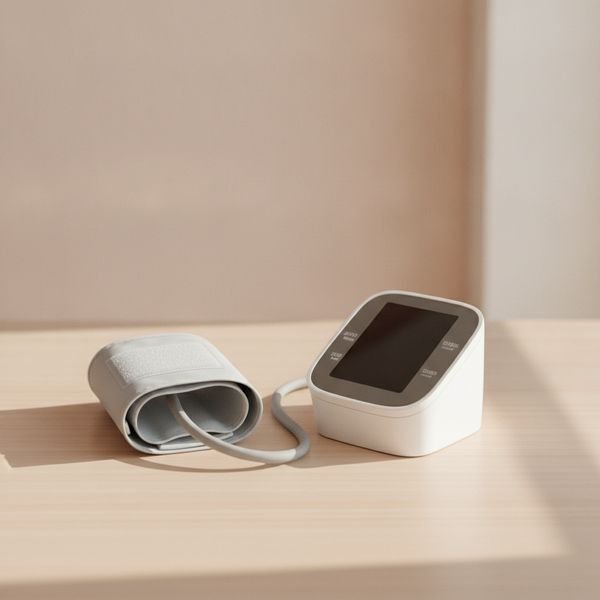
01 · The one with real clinical backingA validated upper-arm blood pressure monitor
This is the most useful device on the page by a wide margin, because home blood pressure readings are genuinely used by clinicians and often reflect your normal state better than a single reading taken in a surgery. Two specifics matter. Buy upper-arm, not wrist — wrist monitors are far more sensitive to position and are not recommended for routine use. And check the specific model appears on a recognised validation list, because a great many monitors on sale have never been independently validated at all. Measure the cuff against your arm; the wrong cuff size skews readings substantially.
$45–110Trade-off: Wrong cuff size skews the numbers badly
Why it is here
- Readings clinicians genuinely use
- Validation lists let you check a specific model
- Cheap for a regulated instrument
Worth knowing
- Wrong cuff size skews the numbers badly
- Wrist models are not recommended for routine use
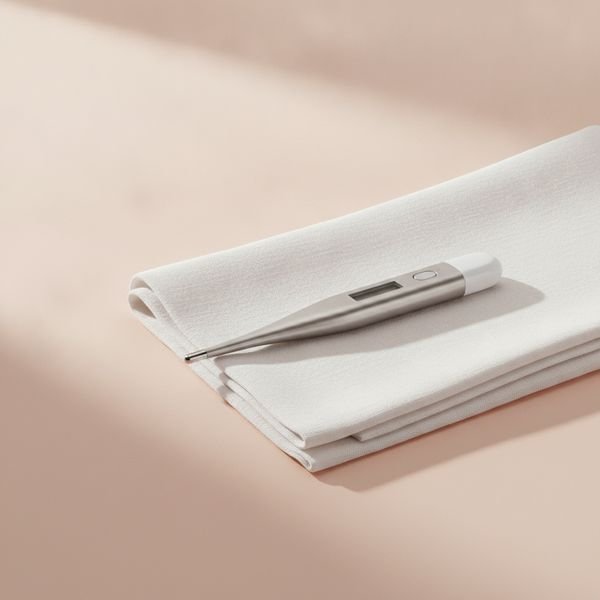
02 · Boring, essential, cheapA digital thermometer
Every home should own one, and most own one with a flat battery. The main decision is type. A simple oral or underarm digital stick is the cheapest and the most consistently accurate, and it takes a little longer. Infrared forehead and ear thermometers are much faster and far more sensitive to technique, distance and whether the person just came in from the cold — which is exactly when people use them. If you buy infrared for speed with children, take two readings and treat a surprising result as a reason to check with the stick rather than a conclusion.
$12–45Trade-off: Infrared accuracy depends heavily on technique
Why it is here
- Cheap and genuinely necessary
- Contact digital sticks are the most consistent
- Infrared is fast for a sleeping child
Worth knowing
- Infrared accuracy depends heavily on technique
- The one you own probably needs a battery
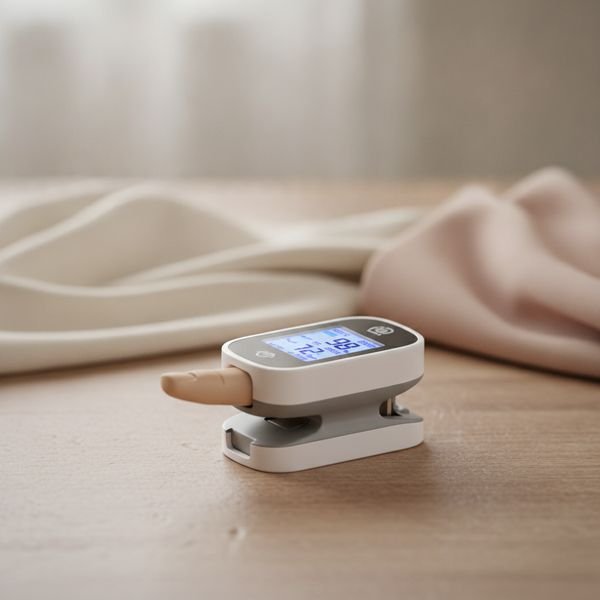
03 · Useful, with a known limitationA pulse oximeter
A fingertip oximeter estimates blood oxygen saturation and is a genuinely useful home device, particularly for people managing a known respiratory condition under medical guidance. One limitation is well documented and worth knowing before you rely on it: these devices have been found to overestimate saturation in people with darker skin, meaning a reading can look reassuring when it is not. Cold hands, nail polish and movement also skew readings. Treat it as one input among several — how someone looks and how breathless they are matters more than the number, and symptoms always warrant a call regardless of what it says.
$25–60Trade-off: Documented overestimation on darker skin tones
Why it is here
- Genuinely useful under medical guidance
- Cheap and immediate
- Also gives a pulse reading
Worth knowing
- Documented overestimation on darker skin tones
- Cold hands, polish and movement skew readings
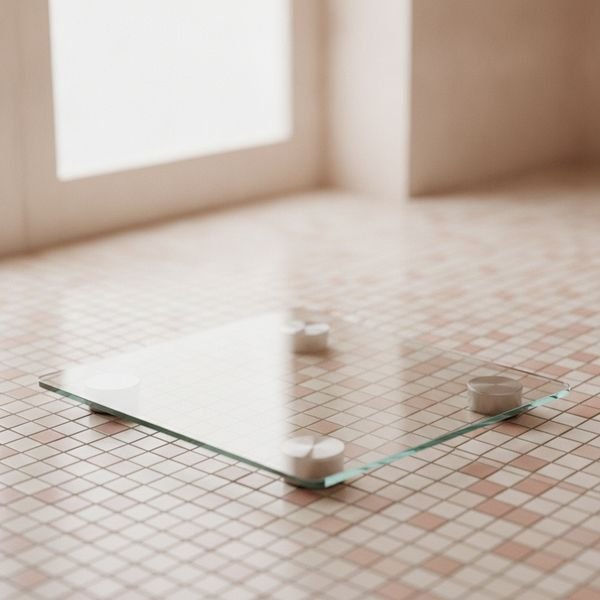
04 · Trust the line, not the numberA smart scale, used for the trend only
Weight fluctuates by a couple of kilos across a day from water, food and salt, so a single reading tells you very little and a daily reading can be actively demoralising for no good reason. What a connected scale does well is plot the trend, and the trend over weeks is the only part that means anything. The body fat percentage these report is derived from a small electrical current and is not accurate in absolute terms — it can be loosely useful as a direction of travel, and should not be treated as a measurement. If weight tracking is unhelpful for your relationship with food, skipping this entirely is a reasonable choice.
$35–90Trade-off: Body fat percentage is not an accurate measurement
Why it is here
- The multi-week trend is the useful output
- Automatic logging removes the manual step
- Cheap
Worth knowing
- Body fat percentage is not an accurate measurement
- Daily weighing is demoralising and uninformative
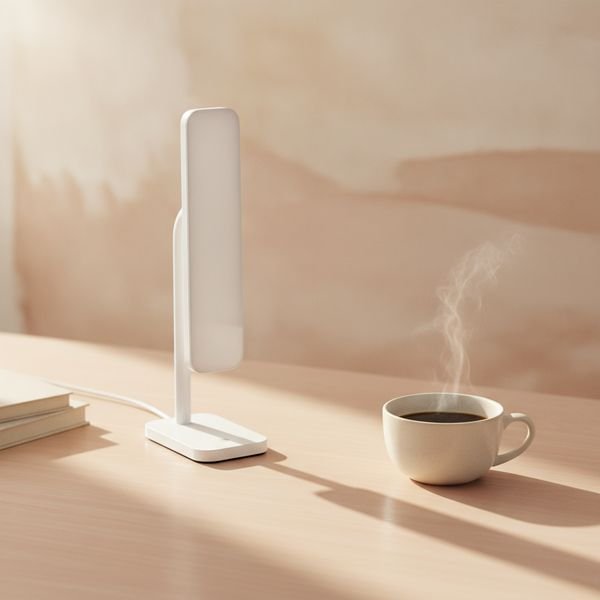
05 · Check the lux figureA SAD lamp, if your winters are dark
Bright light in the morning is one of the better-supported non-drug approaches for seasonal low mood in dark climates, and it also helps shift a body clock that has drifted late. The specification that matters is 10,000 lux at the distance you will actually sit — many lamps quote that figure at a distance nobody uses, so check the stated working distance rather than the headline number. Use it in the morning for twenty to thirty minutes; evening use can push your sleep later. Speak to a doctor first if you have bipolar disorder, an eye condition, or take photosensitising medication.
$60–160Trade-off: Lux figures are quoted at unrealistic distances
Why it is here
- One of the better-supported non-drug options
- Also useful for shifting a late body clock
- No consumables
Worth knowing
- Lux figures are quoted at unrealistic distances
- Evening use can delay sleep; check with a doctor first
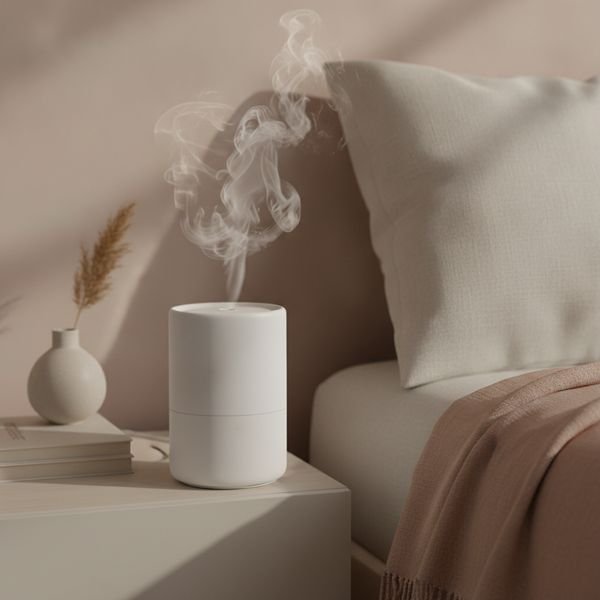
06 · Buy a hygrometer firstA humidifier, if the air is genuinely dry
Dry indoor air genuinely contributes to a scratchy throat, dry skin and disturbed sleep, particularly with heating running all winter. But most people have no idea what their humidity actually is, and running a humidifier in an already-damp room causes mould rather than solving anything. Spend a few pounds on a hygrometer first and see whether you are below about forty percent. If you do buy one, cleaning is not optional — an uncleaned tank aerosolises bacteria into the room you sleep in, which is a genuinely worse outcome than dry air. Choose a model you can actually get your hand inside.
$50–130Trade-off: An uncleaned tank spreads bacteria into the room
Why it is here
- Real benefit in genuinely dry heated air
- A cheap hygrometer tells you if you need one
- Helps sleep and skin in winter
Worth knowing
- An uncleaned tank spreads bacteria into the room
- Useless or harmful if the room is already damp
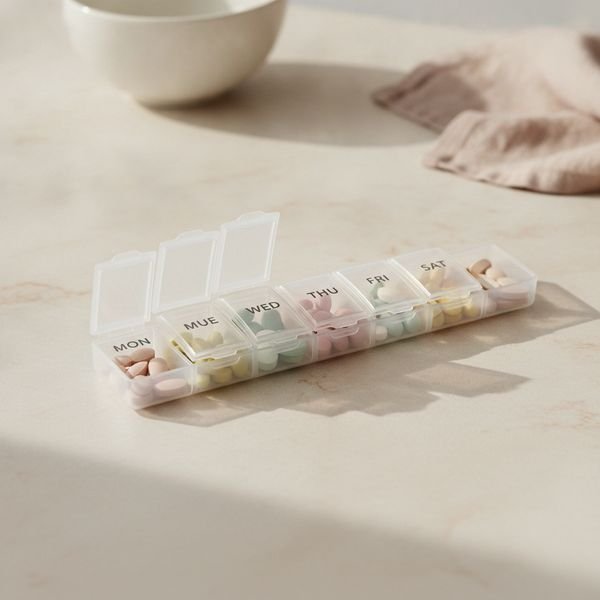
07 · Least glamorous, most effectiveA weekly pill organiser
Nothing else on this page comes close to this for practical value per shekel. Not taking medication as prescribed is an enormous and very ordinary problem, and most of it is not a decision — it is simply forgetting, or genuinely not remembering whether you took the morning dose. A box with visible compartments answers that question at a glance. Get one with separate morning and evening sections if you take doses at different times. Fill it on the same day each week, and keep it somewhere tied to an existing habit like the kettle rather than in a cupboard.
$10–30Trade-off: Only works if refilled on a fixed day
Why it is here
- Enormous practical value for the price
- Answers 'did I take it?' at a glance
- Nothing to charge or maintain
Worth knowing
- Only works if refilled on a fixed day
- Not suitable for medicines needing original packaging
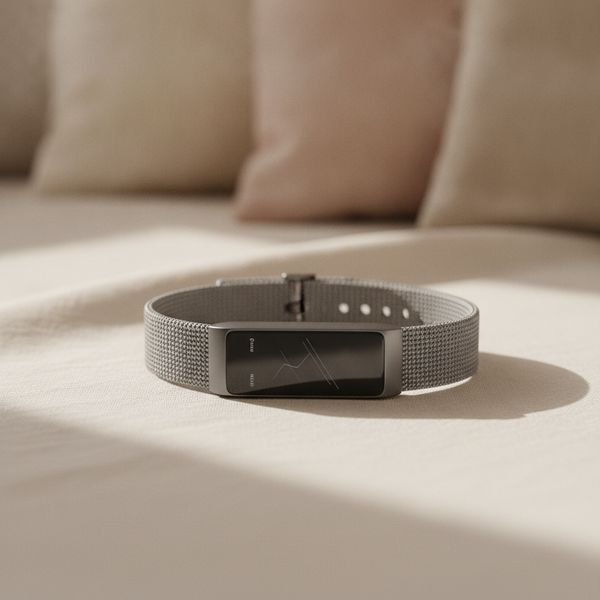
08 · Motivating, not medicalA fitness tracker, for trends not diagnostics
Trackers are good at two things: counting steps, which is a reasonable proxy for daily movement, and making you slightly more aware of how much you move. That awareness is the actual mechanism, and it is worth something. Be sceptical of the rest. Sleep staging from a wrist device does not match what a sleep lab measures, calorie burn estimates carry large errors, and stress scores are largely derived from heart rate variability with a confident label attached. Use it to notice trends over weeks. If it makes you anxious about your sleep — a well-recognised effect — take it off at night.
$70–200Trade-off: Sleep staging and calorie burn are not accurate
Why it is here
- Step counts are a fair proxy for daily movement
- Awareness itself changes behaviour
- Long battery life on most models
Worth knowing
- Sleep staging and calorie burn are not accurate
- Can create genuine anxiety about sleep
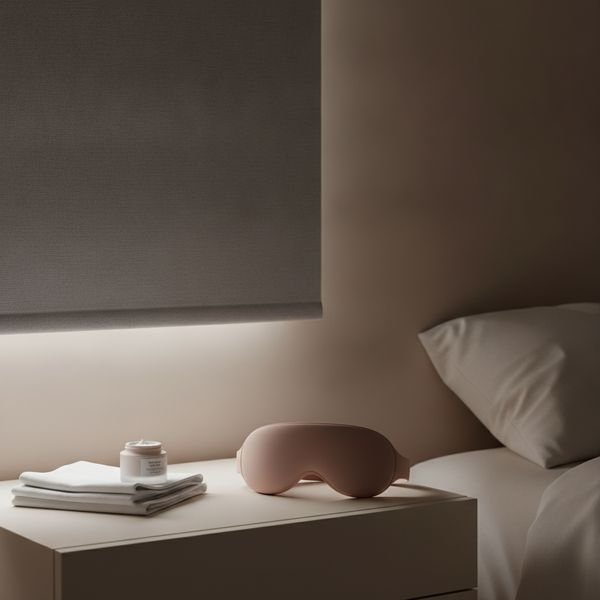
09 · Beats most sleep gadgetsA blackout blind or a good sleep mask
Of everything sold to improve sleep, darkness has among the strongest evidence and the lowest price. Light suppresses melatonin and light leaking around a thin curtain at 5am in summer is a common and entirely fixable cause of early waking. A blackout blind fitted inside the window recess is the proper solution; a contoured sleep mask that does not press on the eyes costs a fraction and travels. Either will do more for most people than a sleep tracker, an app or a supplement — which is worth saying, because those are what get marketed and this is not.
$20–120Trade-off: Blinds need measuring and fitting
Why it is here
- Strong evidence, very low cost
- Fixes early summer waking directly
- A mask travels and costs almost nothing
Worth knowing
- Blinds need measuring and fitting
- Flat masks press on the eyes — get a contoured one
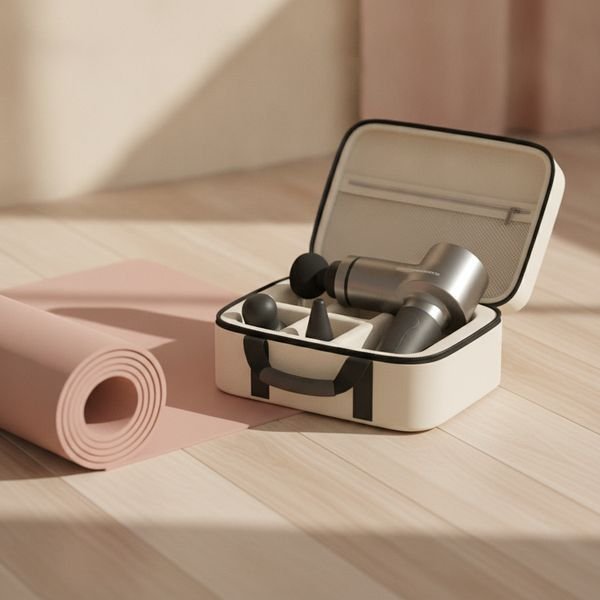
10 · Feels good, claims outrun evidenceA percussive massage gun
These reliably feel good and can temporarily increase range of motion and reduce the sensation of muscle soreness, which is a real if modest benefit. What the evidence does not support is the larger marketing story about flushing lactic acid, accelerating recovery or breaking down adhesions. Judge it as a pleasant, convenient self-massage tool and it is decent value; judge it by the claims on the box and you will be disappointed. Avoid bone, joints, the neck and any area that is injured, swollen or numb, and talk to a doctor before using one if you take blood thinners or have a clotting condition.
$80–250Trade-off: Recovery and lactic acid claims are unsupported
Why it is here
- Genuinely pleasant and convenient
- Temporary range-of-motion and soreness benefit
- Reaches areas a foam roller cannot
Worth knowing
- Recovery and lactic acid claims are unsupported
- Not for bone, joints, neck or injured areas
Common questions
Are smartwatch health features accurate?
Heart rate at rest is generally good, and ECG features on cleared devices have real validation. Sleep staging, calorie burn and stress scores are estimates with large error margins — useful as trends, not as measurements.
Which single device is most worth owning?
A validated upper-arm blood pressure monitor, if it is relevant to you. It is the one device here whose readings a clinician will genuinely use, and high blood pressure has no symptoms until it matters a great deal.
My device gave me a worrying reading. What should I do?
Take it again, correctly, after sitting quietly for five minutes — technique errors are common. If it stays abnormal, or you have symptoms, contact a doctor. Do not change any prescribed medication based on a home reading.
What is the most overrated health gadget?
Anything promising detox, and posture-correcting wearables. Also most sleep-tracking rings and bands for people who already sleep fine — for some users the tracking itself becomes a source of anxiety about sleep.
Today's deals
See what is discounted right now.
Deals →← All guides
As an AliExpress affiliate we earn from qualifying purchases. Prices and availability are accurate as of the date of publication and may change.