Beauty devices are the category where marketing runs furthest ahead of evidence. Claims are made in language that sounds clinical without being clinical, and words like renew, revitalise and boost are chosen precisely because they mean nothing specific and therefore cannot be wrong.
So this list is organised around a simple question: what does the thing actually do, mechanically, and is there reasonable evidence it does it. Some of these are genuinely good tools. Others are pleasant rituals with modest effects, and we say so rather than pretending otherwise.
Nothing here is medical advice, and none of it treats a skin condition. If you are dealing with persistent acne, hair loss, rosacea or pigmentation, a dermatologist will do more for you in one appointment than anything on this page. Do a patch test with any new device, and follow the instructions on eye safety with anything that emits light.
Prices are approximate at the time of writing. Reviewed in September 2026: the picks and reasoning below still hold.
The short version
An ionic hair dryer with a concentrator nozzle
The device that does the most
Disclosure. The links on this page are affiliate links. If you buy through one we may earn a commission at no extra cost to you. It does not affect what makes this list or the order it is in.
How we picked
We looked for a plausible mechanism and independent evidence, not brand claims. Where a device has reasonable published support we say so; where the effect is mainly temporary, cosmetic or a pleasant ritual, we say that instead. We have not personally tested these products, and individual results vary enormously with skin and hair type. Nothing here diagnoses or treats any condition.
At a glance
Prices are approximate at the time of writing and change often.
The picks
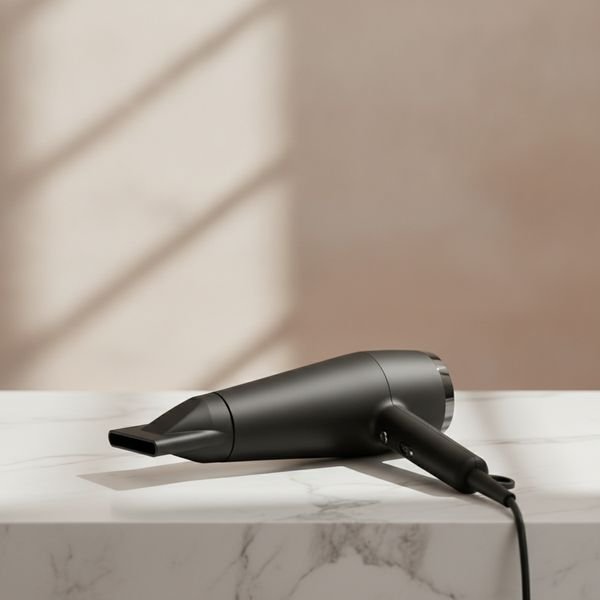
01 · The device that does the mostAn ionic hair dryer with a concentrator nozzle
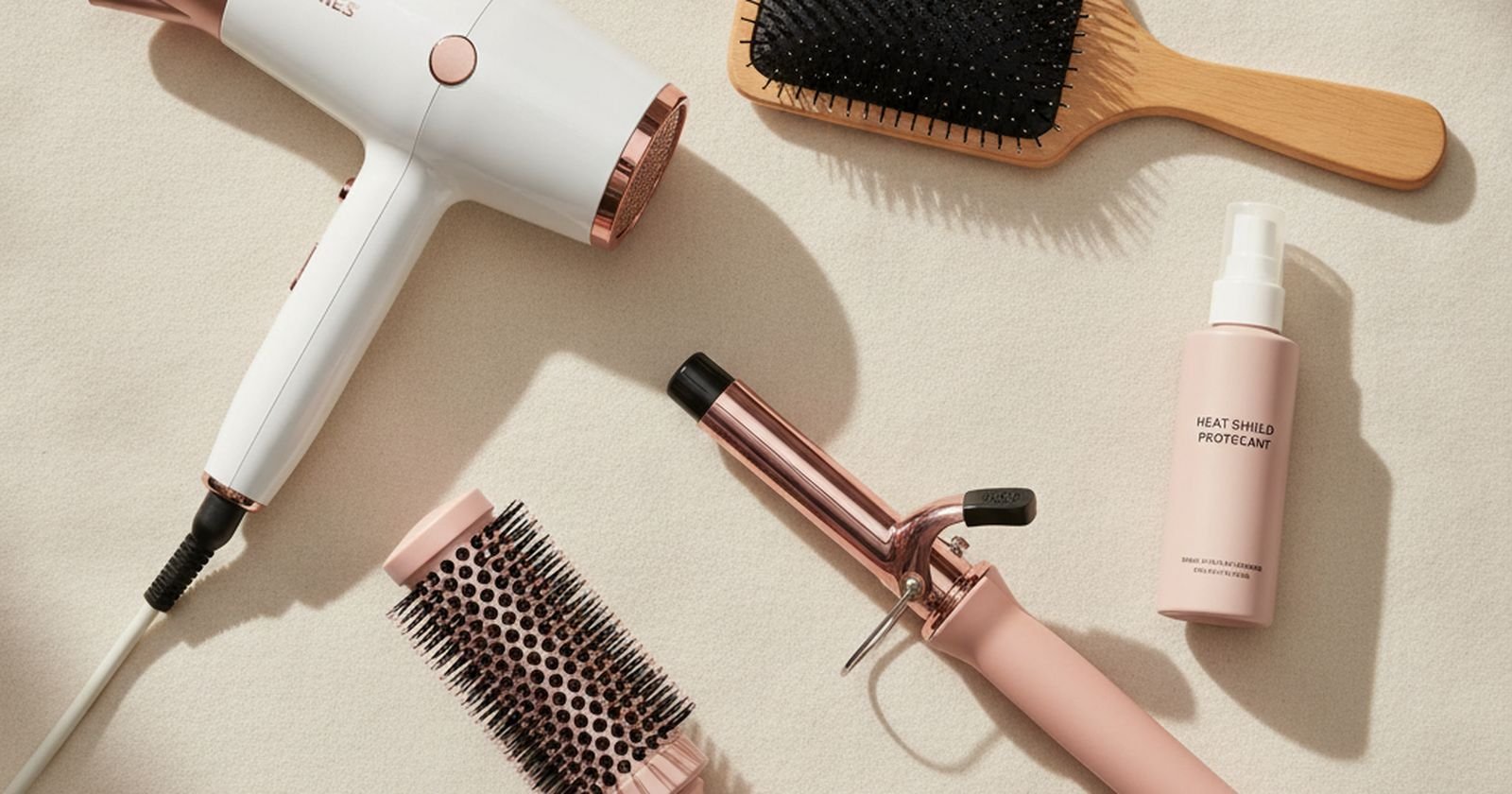
Of everything on this page, a good dryer changes the most for the most people, because heat damage is cumulative and a dryer that finishes faster at a lower temperature does measurably less of it. The features that matter are airflow rather than wattage, a genuine cool shot to set the style, and a concentrator nozzle, which directs air along the hair rather than blasting it in all directions. The very expensive models are quieter, lighter and faster, which is a real quality-of-life difference over years of daily use, but a mid-priced dryer used correctly beats an expensive one held too close.
$60–400Trade-off: Wattage is a poor guide — look at airflow
Why it is here
- Faster drying means less cumulative heat damage
- Concentrator nozzle genuinely improves results
- Cool shot sets the style properly
Worth knowing
- Wattage is a poor guide — look at airflow
- Premium pricing buys comfort more than results
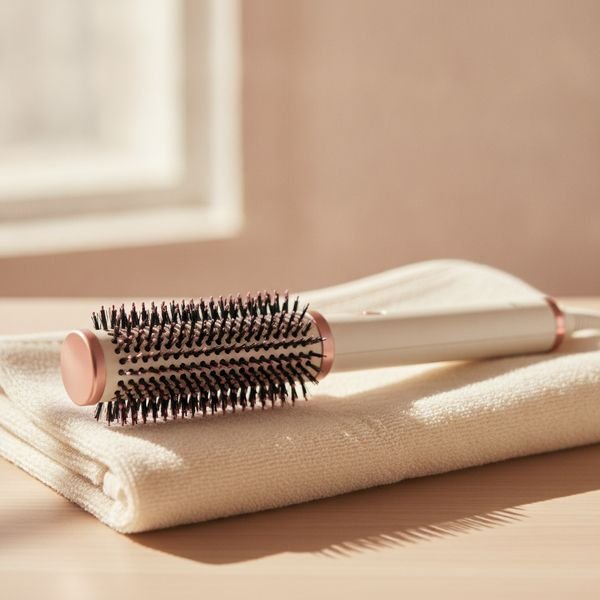
02 · Replaces two tools with oneA hot air styling brush
This does the job of a dryer and a round brush at once, which matters because the hard part of a home blow-dry is coordinating both hands with a brush and a nozzle. One tool halves the difficulty, and for most people that means a noticeably better result than they were getting. Best on medium-length hair with some natural body. Very short hair does not give the bristles enough to grip, and very thick or coarse hair usually needs more power than these produce. Use it on damp rather than soaking hair — rough-dry to about eighty percent first.
$50–150Trade-off: Poor on very short, very thick or coarse hair
Why it is here
- One-handed styling is far easier
- Good results for people who cannot blow-dry well
- Cheaper than a dryer plus salon visits
Worth knowing
- Poor on very short, very thick or coarse hair
- Slower than a dedicated dryer on long hair
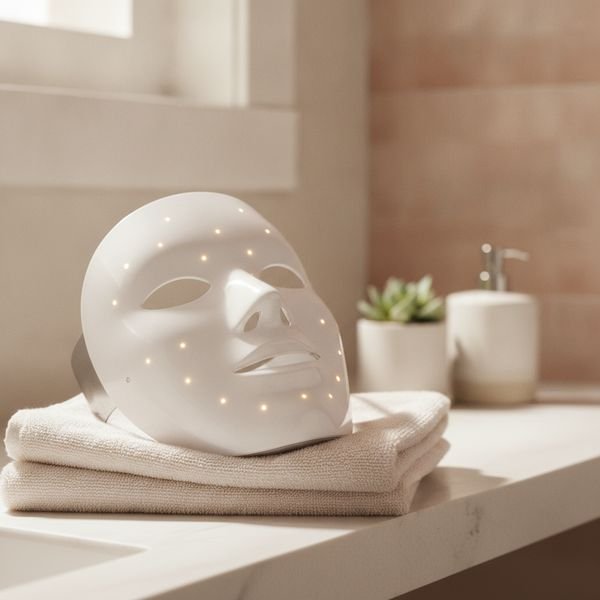
03 · Some evidence, big caveatsAn LED light therapy mask
This is the device where honesty matters most. There is a real body of research behind red and blue light in dermatology, and consumer masks are far weaker than the equipment those studies used — so expect a smaller effect, if any, and expect it slowly over months of near-daily use rather than in a fortnight. Buy only from a brand that publishes wavelengths and irradiance and includes proper eye protection, and follow the eye guidance exactly. If you are pregnant, taking photosensitising medication or have a light-sensitive condition, ask a doctor before using one at all.
$100–400Trade-off: Consumer units are far weaker than clinical devices
Why it is here
- A real research basis exists in dermatology
- Passive — you can wear it while doing nothing
- No consumables
Worth knowing
- Consumer units are far weaker than clinical devices
- Needs months of consistent use; eye safety matters
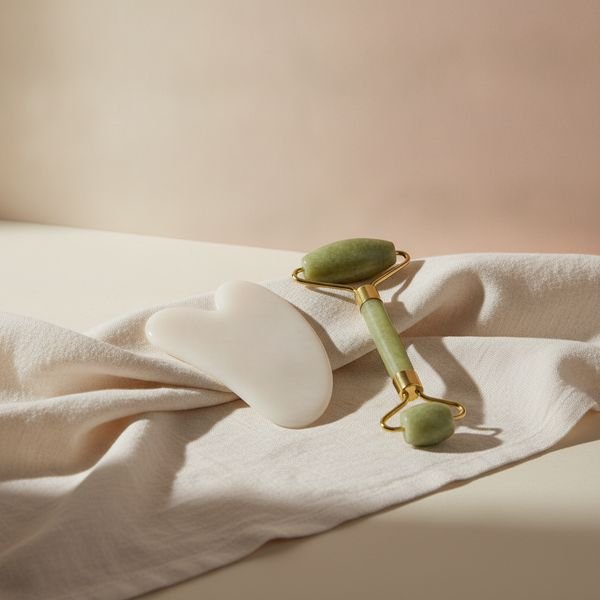
04 · Pleasant, modest, temporaryA gua sha stone or facial roller
Here is the honest version. Massaging the face moves fluid, and moving fluid temporarily reduces the morning puffiness around the eyes and jaw. That effect is real, and it is also temporary — it is drainage, not a change to your face. What these tools do not do is lift, tighten or reshape anything permanently, whatever the before-and-after photographs suggest. Judged as a cheap, genuinely relaxing few minutes that leaves you looking less puffy, a gua sha stone is good value. Always use it with oil or a slip serum; dragging a stone across dry skin is how you cause irritation.
$12–35Trade-off: The effect is temporary drainage, not lifting
Why it is here
- Genuinely reduces morning puffiness
- Cheap, and a pleasant few minutes
- Nothing to break or recharge
Worth knowing
- The effect is temporary drainage, not lifting
- Needs oil or serum, or it irritates skin
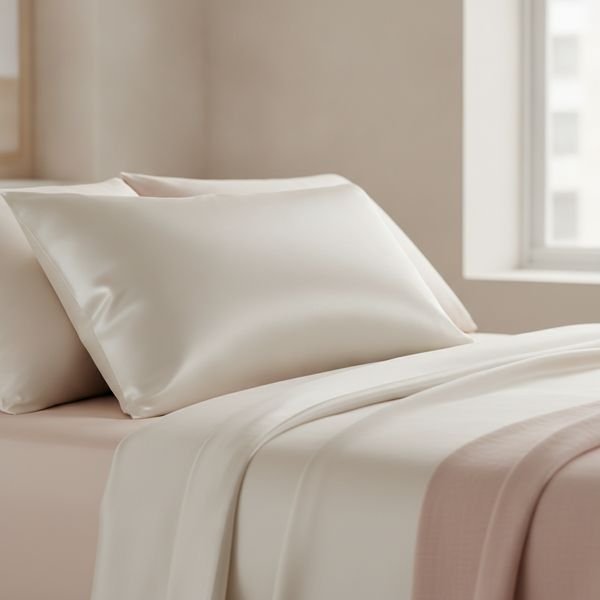
05 · Cheap, and quietly effectiveA silk or satin pillowcase
Cotton grips hair and drags on skin as you move through the night, which is a meaningful part of why some people wake with creased cheeks and frizz. A smoother surface reduces that friction, and for curly, fine or chemically treated hair the difference in morning frizz and breakage is noticeable rather than theoretical. It also does not wick moisture out of your skin and hair the way cotton does. This is one of the few genuinely low-cost, low-effort items in beauty that does what it says, largely because the claim is modest and mechanical. Satin performs similarly to silk for much less.
$20–60Trade-off: Silk needs gentle washing
Why it is here
- Less friction means less frizz and breakage
- Requires no effort or routine change
- Satin gives most of the benefit far cheaper
Worth knowing
- Silk needs gentle washing
- Does nothing for hair you do not sleep on
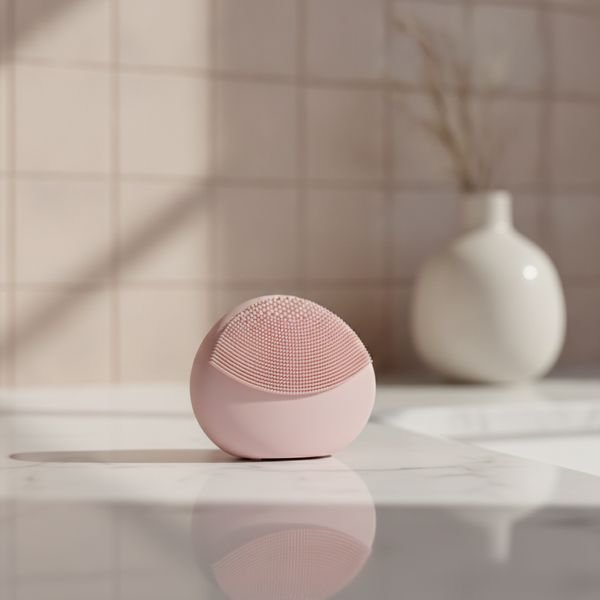
06 · Only if your skin tolerates itAn electric facial cleansing brush
A cleansing brush removes makeup and sunscreen more thoroughly than fingers, which is a genuine benefit if you wear heavy products. But over-cleansing is one of the most common causes of irritated, reactive skin, and a device makes over-cleansing much easier to do. Silicone heads are the better choice over bristles: they do not harbour bacteria and they need no replacement heads, which also removes an ongoing cost. Use it a few times a week rather than twice daily, stop if your skin becomes tight or reactive, and skip it entirely if you use retinoids or acids.
$30–150Trade-off: Very easy to over-cleanse and irritate skin
Why it is here
- More thorough removal of makeup and sunscreen
- Silicone heads never need replacing
- Waterproof and easy to clean
Worth knowing
- Very easy to over-cleanse and irritate skin
- Not compatible with retinoid or acid routines
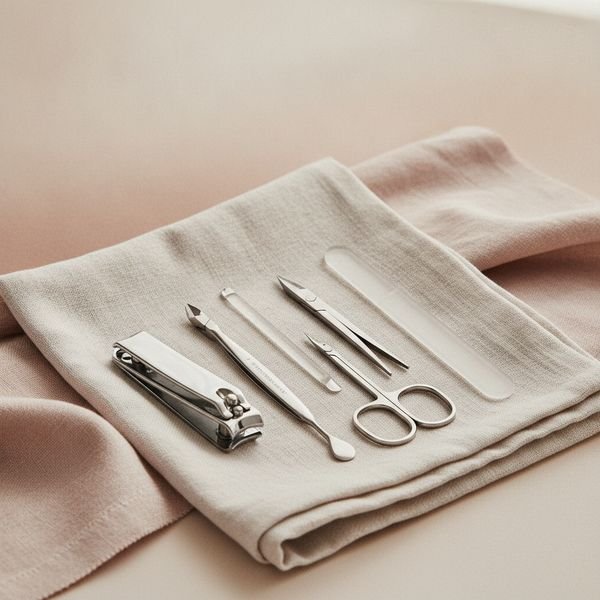
07 · Boring, and genuinely worth itA quality nail care set
Cheap emery boards tear the nail edge rather than cutting it, and that ragged edge is where splits and peeling start. A glass file cuts cleanly and lasts effectively forever, and it can be washed, which cardboard cannot. Good stainless clippers cut without crushing. The rest of a typical set is optional, and one specific warning: leave your cuticles alone. Pushing them back gently after a shower is fine, cutting them is not — that seal is what keeps infection out of the nail bed, and manicures that cut it are the most common route to an infected finger.
$25–60Trade-off: Glass files chip if dropped
Why it is here
- Glass files cut cleanly and last indefinitely
- Washable, unlike cardboard boards
- Prevents the splitting that ragged edges cause
Worth knowing
- Glass files chip if dropped
- Most sets include tools you should not use
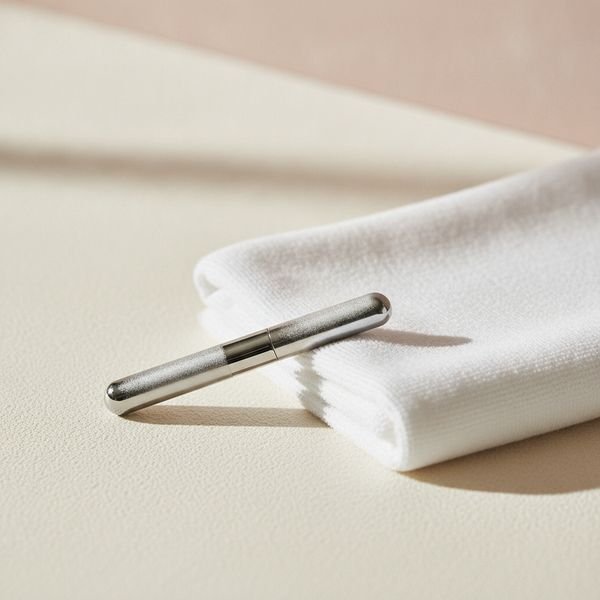
08 · A cold spoon also worksA jade or metal cooling under-eye tool
Cold constricts blood vessels, which reduces morning puffiness around the eyes for an hour or two. That is the entire mechanism, and it works. What is worth knowing is that the mechanism is the cold, not the tool — a chilled teaspoon, a cool damp flannel or the back of a cold metal spoon from the fridge do exactly the same thing for nothing. Buy the tool if having a dedicated one in the fridge means you will actually use it in the morning, which for a lot of people is a legitimate reason. Just do not expect it to do anything a cold spoon would not.
$10–30Trade-off: A cold spoon does the same job for free
Why it is here
- The cooling effect on puffiness is real
- Cheap
- Having one ready makes you actually use it
Worth knowing
- A cold spoon does the same job for free
- Effect lasts an hour or two at most
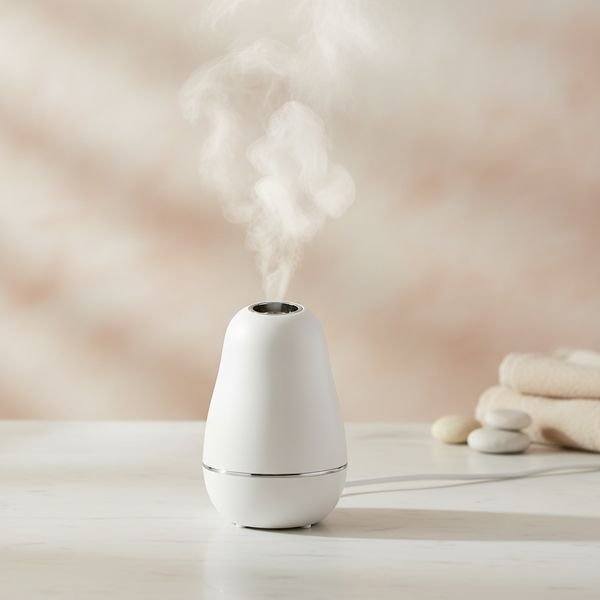
09 · Nice ritual, modest effectA facial steamer
Steam hydrates the outer layer of skin temporarily and softens surface debris, which makes cleansing afterwards a little more effective and the whole thing feel pleasant. It does not open pores, because pores are not muscles and have nothing to open with — that phrase is marketing shorthand for softening what is in them. Used once a week it is a nice, low-risk ritual. Used often, or too hot, or too close, it can leave skin dry and irritated, and it is generally not recommended for rosacea or very reactive skin. Keep it thirty centimetres away and limit sessions to about ten minutes.
$35–80Trade-off: Does not open pores — that is a marketing phrase
Why it is here
- Genuinely pleasant and relaxing
- Softens debris before cleansing
- Low risk when used occasionally
Worth knowing
- Does not open pores — that is a marketing phrase
- Can dry or irritate reactive skin if overused
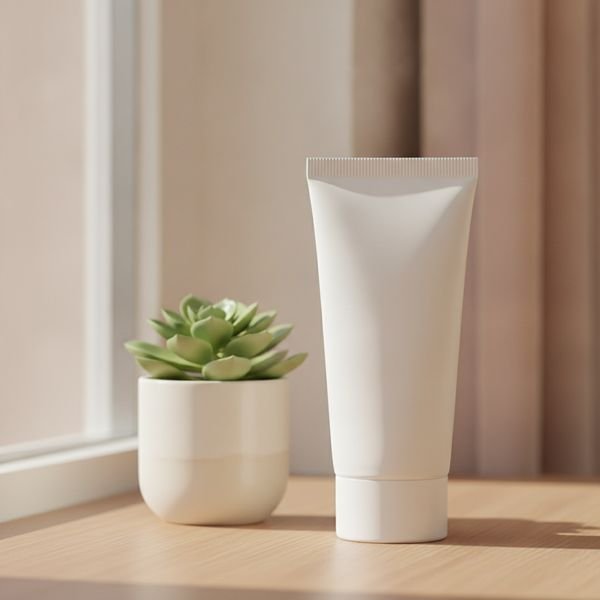
10 · The one with the strongest evidenceA broad-spectrum sunscreen you will actually wear
It is not a device and it is the least exciting entry here, and it has more evidence behind it than everything else on this page combined. Daily broad-spectrum sun protection is the single best-supported thing you can do for how your skin ages, and no LED mask or serum comes close. The only specification that really matters is that you will wear it every day, so texture and finish are not vanity concerns — they are the difference between a bottle you use and a bottle in a drawer. Try samples until you find one you do not mind, then apply more than feels necessary and reapply if you are outdoors.
$12–40Trade-off: Only works if worn daily and generously
Why it is here
- By far the strongest evidence base here
- Cheap relative to every device on this page
- Works on the cause rather than the appearance
Worth knowing
- Only works if worn daily and generously
- Finding a texture you like takes trial and error
Common questions
Do LED masks actually work?
There is real dermatological research behind the underlying light therapy, but consumer masks are much weaker than clinical devices. Expect a small effect over months of consistent use, not a transformation, and buy only from brands that publish wavelength and irradiance figures.
What is the most overrated beauty device?
Anything promising to lift or tighten skin permanently through massage. Massage moves fluid and feels good, which is worth something — but it does not restructure tissue, and the before-and-after photographs rely heavily on lighting and angle.
If I only buy one thing, what should it be?
Sunscreen, then a decent hair dryer if you heat-style regularly. Those two have the clearest effect on how your skin and hair actually look over years.
Are expensive hair dryers worth the money?
They are lighter, quieter and faster, which is a real daily comfort difference if you dry your hair most days. They will not repair damaged hair. A mid-priced dryer used at a lower heat and a sensible distance gets you most of the way.
Today's deals
See what is discounted right now.
Deals →← All guides
As an AliExpress affiliate we earn from qualifying purchases. Prices and availability are accurate as of the date of publication and may change.