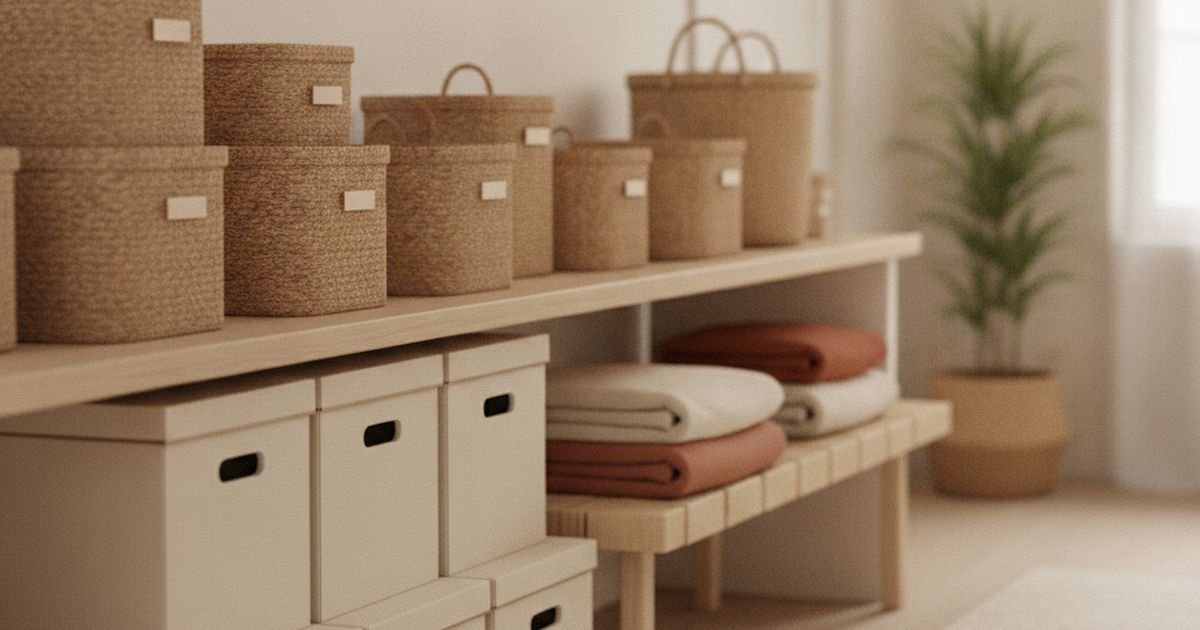
There is an uncomfortable truth underneath this entire category: most storage products do not create space, they relocate clutter into a nicer-looking container. Buying twelve matching boxes for things you never use produces a tidy cupboard full of things you never use.
So the honest version of this list splits in two. Some of these genuinely add usable space — vertical space, unused space, space you already own but cannot reach. Others simply make an existing system work, which is worth paying for. We flag which is which.
The single most effective step costs nothing: decide what leaves before you decide what to buy. Measure the space afterwards, not before, because the most common mistake in this category is buying storage that does not fit the shelf it was bought for.
Prices are approximate at the time of writing.
The short version
Under-bed storage on wheels
Space you already own
Disclosure. The links on this page are affiliate links. If you buy through one we may earn a commission at no extra cost to you. It does not affect what makes this list or the order it is in.
How we picked
We separate things that genuinely add usable space from things that merely tidy, and we say which is which rather than selling both as the same. We rely on published testing and long-run owner reports, and we have not personally used every product here. Where the honest advice is to declutter or measure rather than buy, we give that instead.
At a glance
Prices are approximate at the time of writing and change often.
The picks
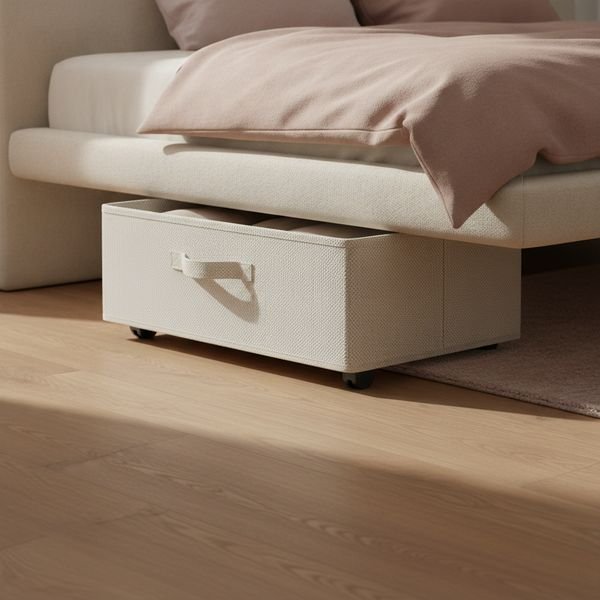
01 · Space you already ownUnder-bed storage on wheels
The floor under a bed is usually the largest unused volume in a bedroom, and it goes unused because reaching it means lying on the floor. Wheels and a handle fix exactly that, which is why this is the entry that most reliably converts dead space into space you will actually use. Measure the clearance under your frame first, including any central support bar that sits lower than the sides — that bar is the reason a great many of these boxes get returned. Get a lid, because open boxes under a bed collect dust at a remarkable rate.
$25–60Trade-off: Central bed support bars catch people out
Why it is here
- Converts the largest dead space in most bedrooms
- Wheels are what make it actually get used
- Cheap
Worth knowing
- Central bed support bars catch people out
- Open boxes fill with dust fast
02 · Doubles a cupboard cheaplyAdjustable shelf risers and stackable shelves
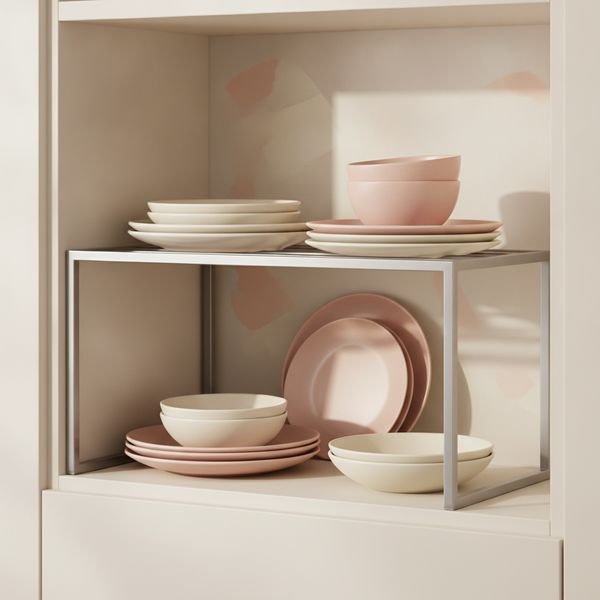
Most kitchen cupboards have a shelf spacing designed for nothing in particular, so a tall gap sits above short items and half the volume is air. A riser is a second shelf inside the shelf, and it genuinely doubles usable capacity in that section for very little money. This is the clearest case on the page of a product that adds space rather than hiding clutter. Choose adjustable or stackable ones so they adapt as what you store changes, and check the depth as well as the height — a riser that overhangs the shelf edge will be knocked every time you reach past it.
$20–45Trade-off: Depth matters as much as height
Why it is here
- Genuinely adds capacity, not just tidiness
- Very cheap for the volume gained
- Adjustable ones adapt over time
Worth knowing
- Depth matters as much as height
- Cheap wire versions wobble under weight
03 · Free vertical spaceOver-door hooks and a hanging organiser
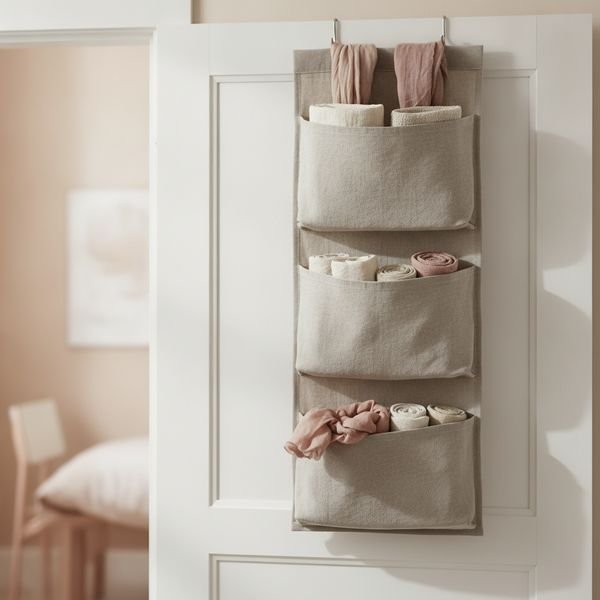
The back of every door in a home is a full sheet of vertical space doing nothing. Over-door hooks need no fixings and no permission, which makes them the obvious first move in a rented flat. A pocketed hanging organiser turns the same area into shoe, cleaning-product or accessory storage. Two practical limits. Check the hook depth against your door thickness, because modern doors are often thinner than the hooks assume. And a loaded organiser stops many doors closing flush, which is fine on a cupboard and irritating on a bathroom.
$15–40Trade-off: Hook depth often does not match modern doors
Why it is here
- No drilling, no landlord permission needed
- Uses space that is otherwise completely wasted
- Cheap and instantly reversible
Worth knowing
- Hook depth often does not match modern doors
- A loaded organiser stops the door closing flush
04 · Clear beats prettyClear, stackable, labelled boxes
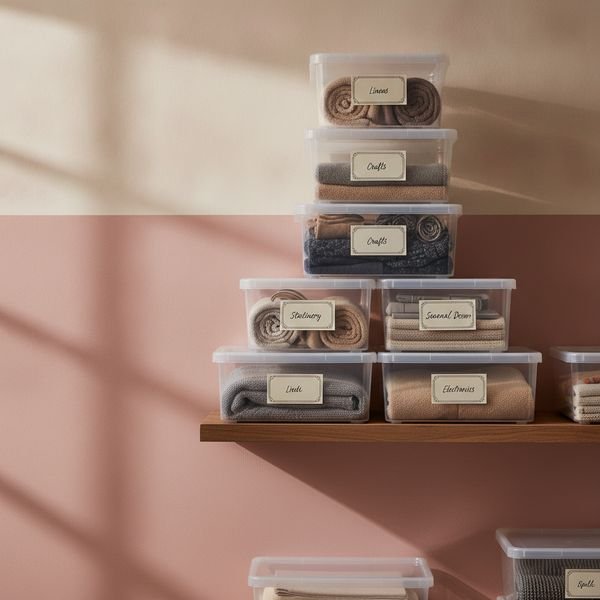
Opaque boxes are where possessions go to be forgotten, and forgotten possessions get bought again. Clear sides plus a written label on the front is a boring combination that solves that completely. Buy one or two sizes rather than eight, because boxes that stack cleanly are far more useful than boxes that individually fit better — a stack only works if the tops are flat and the footprints match. Label the front face, not the lid, since a box in a stack shows you its front and never its top. Skip anything with a decorative texture; you want to see inside.
$40–90 for a setTrade-off: Clear plastic is less attractive on open shelving
Why it is here
- You can see what is inside, so you use it
- Uniform sizes stack properly
- Cheap and endlessly reusable
Worth knowing
- Clear plastic is less attractive on open shelving
- Mixed sizes defeat the point
05 · Great for two things, bad for othersVacuum compression bags, for bedding only
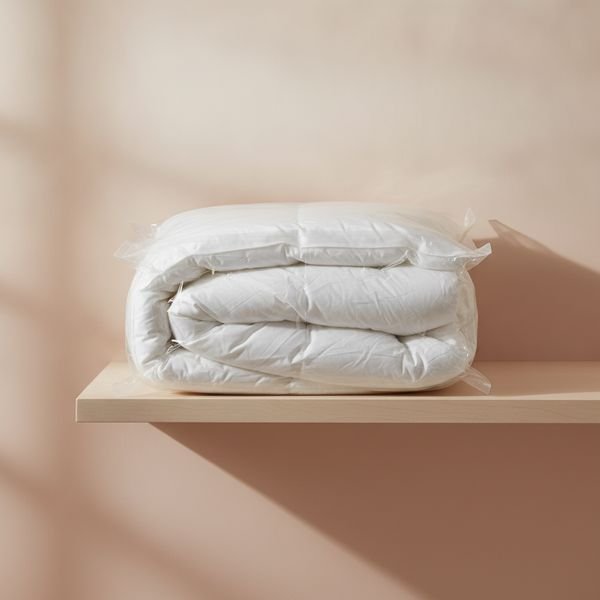
For a spare duvet, winter coats or a sleeping bag, these are excellent — bedding is mostly trapped air, and removing it cuts the volume by two thirds. That is a genuine space gain, not tidying. Be careful what else you put in them, though. Down loses loft if compressed for many months, natural fibres like wool and leather do not enjoy long compression, and anything slightly damp when sealed will emerge smelling of mildew. Use them for seasonal bedding, store them flat rather than folded, and let contents air out for a day after opening.
$25–50Trade-off: Long compression damages down and natural fibres
Why it is here
- Cuts bedding volume by roughly two thirds
- Real space gain, not just tidying
- Protects from dust and moths
Worth knowing
- Long compression damages down and natural fibres
- Anything sealed damp will smell of mildew
06 · Makes an existing system workDrawer dividers
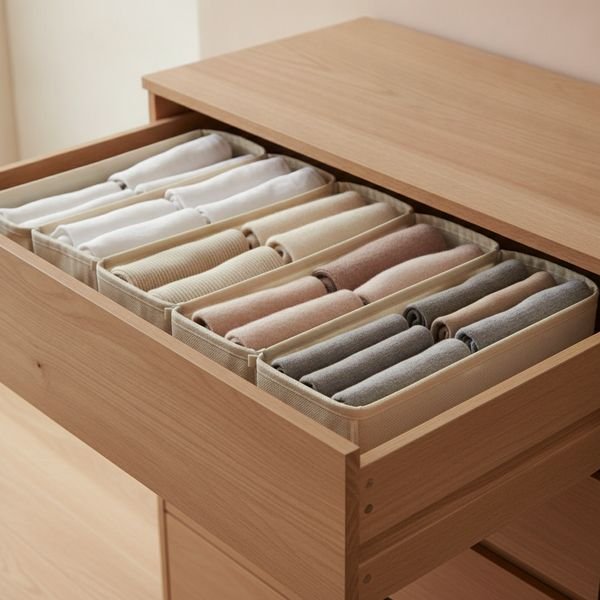
A deep drawer without dividers becomes a single pile within a fortnight regardless of how carefully it was arranged, because taking one thing out disturbs everything around it. Dividers turn one container into several, so removing an item leaves the rest undisturbed. This is honestly in the second category — it does not add space, it makes the space you have keep working. Spring-loaded or adjustable ones fit without tools and adapt to different drawers. Combined with folding clothes vertically so you see every item edge-on rather than stacking them flat, it is the single biggest improvement available to a wardrobe.
$20–45Trade-off: Adds organisation, not capacity
Why it is here
- Stops a drawer collapsing into one pile
- Adjustable ones need no tools
- Pairs well with vertical folding
Worth knowing
- Adds organisation, not capacity
- Spring-loaded types slip in very deep drawers
07 · Uses a gap nothing else fitsA slim rolling cart for a narrow gap
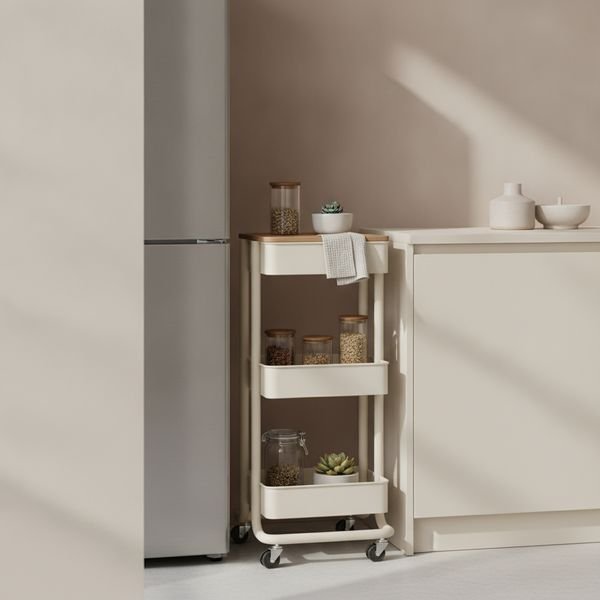
Most kitchens and bathrooms have a dead gap of fifteen to twenty centimetres beside an appliance or a unit, too narrow for anything and too wide to ignore. A slim rolling cart is purpose-built for exactly that gap and turns it into three usable shelves. The wheels are what make it work, because access from the side is the whole problem. Measure the gap at floor level and at worktop height, since skirting boards and pipework often make the usable width narrower than the visible one — that discrepancy is the single most common reason these get returned.
$35–70Trade-off: Skirting and pipework narrow the real gap
Why it is here
- Turns a genuinely dead gap into three shelves
- Wheels solve the access problem
- Moves for cleaning
Worth knowing
- Skirting and pipework narrow the real gap
- Loaded carts are hard to move on soft floors
08 · Best for rentersCommand-style adhesive hooks
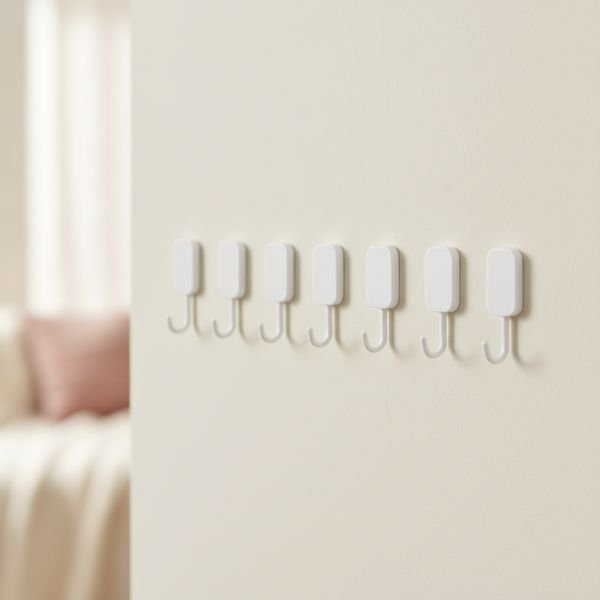
For anyone who cannot drill, these convert wall space into hanging space and come off without taking the paint with them, provided you follow two rules people routinely ignore. Clean the surface with rubbing alcohol rather than a household spray, because most cleaning products leave a residue the adhesive cannot grip. And wait an hour before hanging anything. Respect the stated weight limit with a wide margin, and note they perform poorly on textured wallpaper, freshly painted walls and in steamy bathrooms — three places people put them and then complain.
$12–30Trade-off: Fail on textured wallpaper and in steamy rooms
Why it is here
- No drilling, and removes cleanly
- Ideal for rented flats
- Cheap and instantly reversible
Worth knowing
- Fail on textured wallpaper and in steamy rooms
- Only work if the surface is prepped with alcohol
09 · Fixes the pile everyone hasA shoe rack by the door
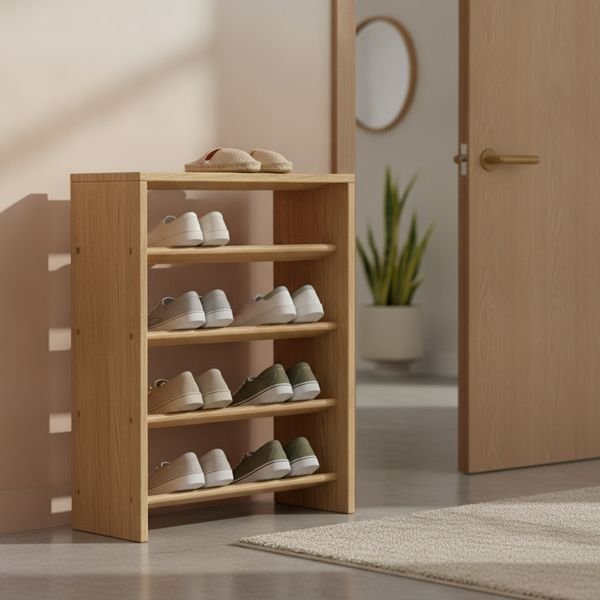
The pile of shoes inside the front door is one of the most universal storage failures, and it happens for a simple reason: the storage is somewhere else and the shoes come off here. Putting a rack exactly where shoes are removed solves it, and no amount of wardrobe organisation will. Tiered or angled racks hold far more in the same floor area than a flat row. Be realistic about capacity — count the pairs actually in circulation, not the pairs you own, and add a couple. A rack that is always full stops being used within a month.
$30–80Trade-off: Undersized racks get abandoned quickly
Why it is here
- Puts storage where the behaviour happens
- Tiered designs hold far more per floor area
- Cheap
Worth knowing
- Undersized racks get abandoned quickly
- Wet shoes need a tray underneath
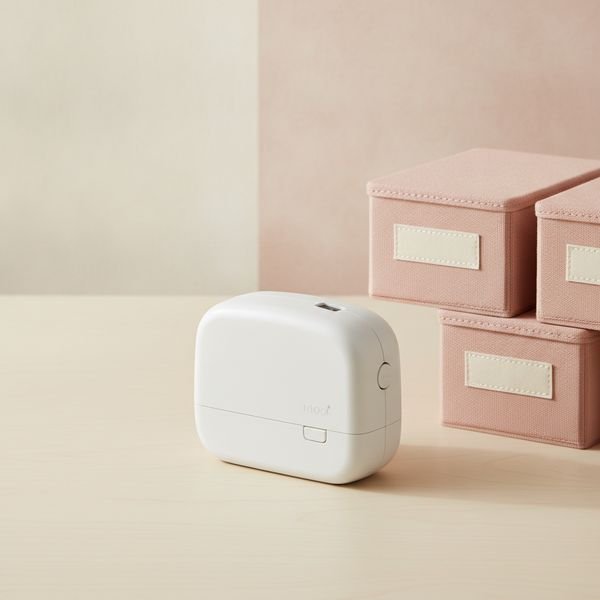
10 · The pen works almost as wellA label maker, or a marker pen
Labelling is what makes a storage system survive contact with other people in the household, because a system only exists if everyone can see what it is. That is the real function — not neatness, but shared legibility. A label maker is pleasant to use and produces something durable, and a marker pen on masking tape does ninety percent of the same job for nothing and is far easier to change when the contents change. Buy the machine if having it makes you actually label things, which for some people it genuinely does. Otherwise the pen is the correct answer.
$0–50Trade-off: Label makers need proprietary tape cartridges
Why it is here
- Makes a system legible to the whole household
- Tape and a pen cost nothing and change easily
- Turns a tidy cupboard into a usable one
Worth knowing
- Label makers need proprietary tape cartridges
- Printed labels are annoying to update
Common questions
Does storage actually create space?
Some of it does — risers, under-bed boxes, slim carts and vacuum bags use volume you already own but cannot currently reach. Dividers, labels and matching baskets organise rather than expand. Both are worth buying; just know which you are getting.
What should I do before buying anything?
Decide what leaves, then measure. Buying containers first is how people end up with storage that does not fit and a cupboard full of things they still do not use.
Are vacuum bags safe for all clothing?
No. They are excellent for spare bedding and synthetic coats. Down loses loft under long compression, wool and leather do not like it, and anything sealed slightly damp will smell of mildew when you open it.
I rent and cannot drill. What are my options?
Over-door hooks, adhesive hooks, tension rods, freestanding shelving and under-bed boxes cover most needs without a single hole. Prep adhesive surfaces with alcohol and respect the weight limits and they hold well.
Today's deals
See what is discounted right now.
Deals →← All guides
As an AliExpress affiliate we earn from qualifying purchases. Prices and availability are accurate as of the date of publication and may change.