Most people upgrade their coffee setup in exactly the wrong order. They buy the espresso machine first, then spend two years wondering why the shots taste nothing like the café down the road. The machine was never the problem — stale supermarket beans and a blade grinder were.
So this list is ordered by leverage: how much better your coffee gets per shekel spent. The first three items will do more for your morning than the last three combined, and two of them cost under $40. If you only read the top of this page, you will still have gotten the useful part.
Prices below are approximate street prices at the time of writing and move around constantly, especially during sale events. Treat them as a rough band for budgeting, not a quote — always check the live listing before you buy.
The short version
Baratza Encore ESP
The upgrade to make first
Disclosure. The links on this page are affiliate links. If you buy through one we may earn a commission at no extra cost to you. It does not affect what makes this list or the order it is in.
How we picked
These picks come from published lab testing, long-run owner reports and specialist coffee forums, cross-checked against current retail listings. We have not personally tested every item here. Where a category has one clear consensus winner we say so; where it genuinely depends on your budget or kitchen, we give you the trade-off instead of a fake verdict.
At a glance
Prices are approximate at the time of writing and change often.
The picks
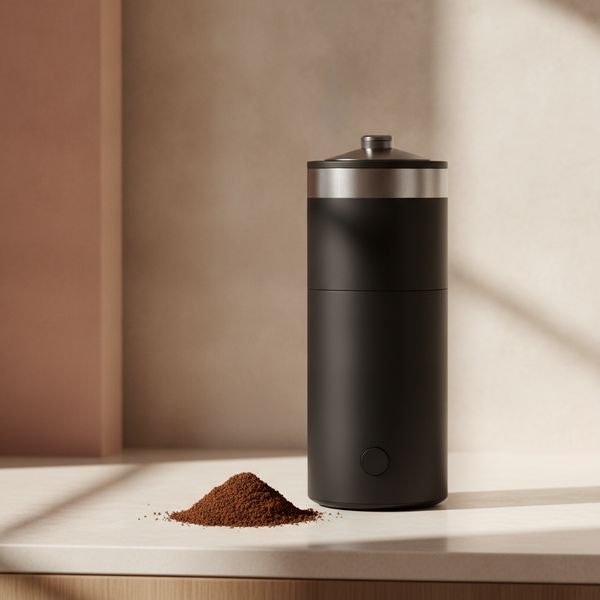
01 · The upgrade to make firstBaratza Encore ESP
If you buy one thing on this page, buy a burr grinder. A blade grinder smashes beans into a mix of boulders and dust, which brews bitter and sour in the same cup — no machine downstream can fix that. Conical burrs cut to a consistent size instead, and the difference is immediate and obvious. The Encore ESP is the version of Baratza's long-running workhorse with a finer low end, so it reaches true espresso range as well as filter. It is not fast and it is not quiet, but it is the grinder that specialist shops have recommended to beginners for over a decade, and Baratza sells replacement parts for it years after purchase.
$180–220Trade-off: Loud, and slower than a premium grinder
Why it is here
- Consistent grind across filter and espresso range
- Replacement burrs and parts stay available for years
- Simple to strip down and clean
Worth knowing
- Loud, and slower than a premium grinder
- Plastic body feels cheaper than the price suggests
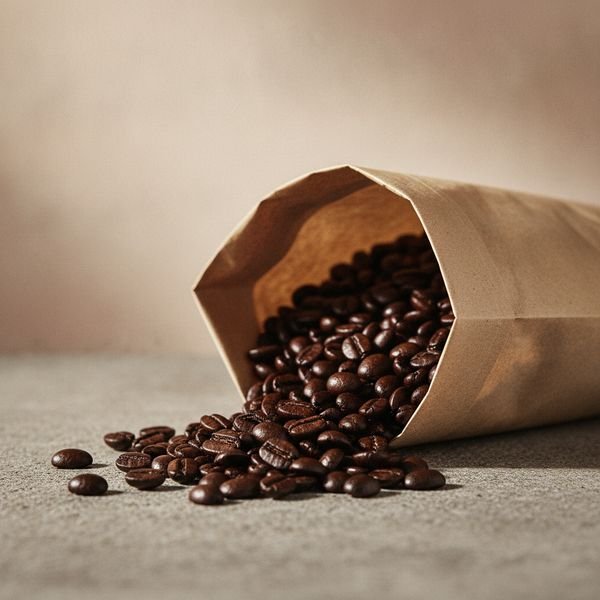
02 · Cheapest real improvementFresh whole beans with a roast date
Coffee is an agricultural product with a short good window, and the supermarket bag marked only with a distant expiry date is usually months past it. Look for a printed roast date and buy something roasted within the last three to four weeks. Whole beans hold their aromatics far longer than pre-ground, which goes flat within days of opening. This is the one item on the list that costs almost nothing extra and changes every single cup you make from now on — which is why it sits this high, above hardware costing ten times more.
$15–25 per bagTrade-off: Needs restocking every few weeks
Why it is here
- Costs the same as the stale option
- Improves every cup regardless of your gear
- Roast date tells you what you are actually buying
Worth knowing
- Needs restocking every few weeks
- Good local roasters are not available everywhere
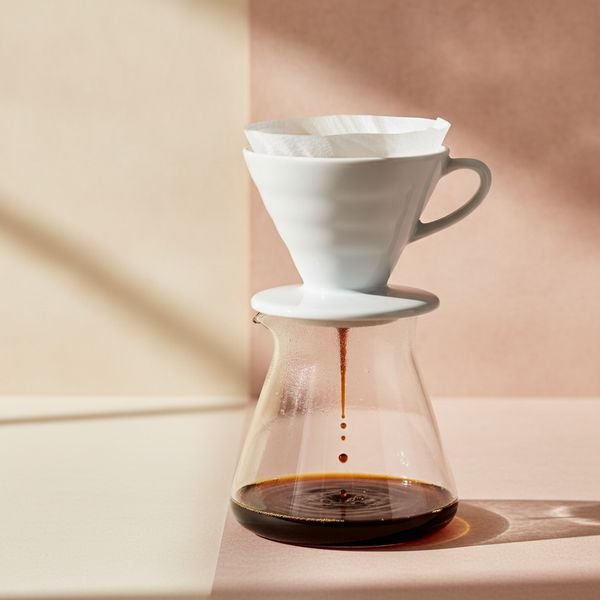
03 · Best cheap brewerHario V60 dripper and server
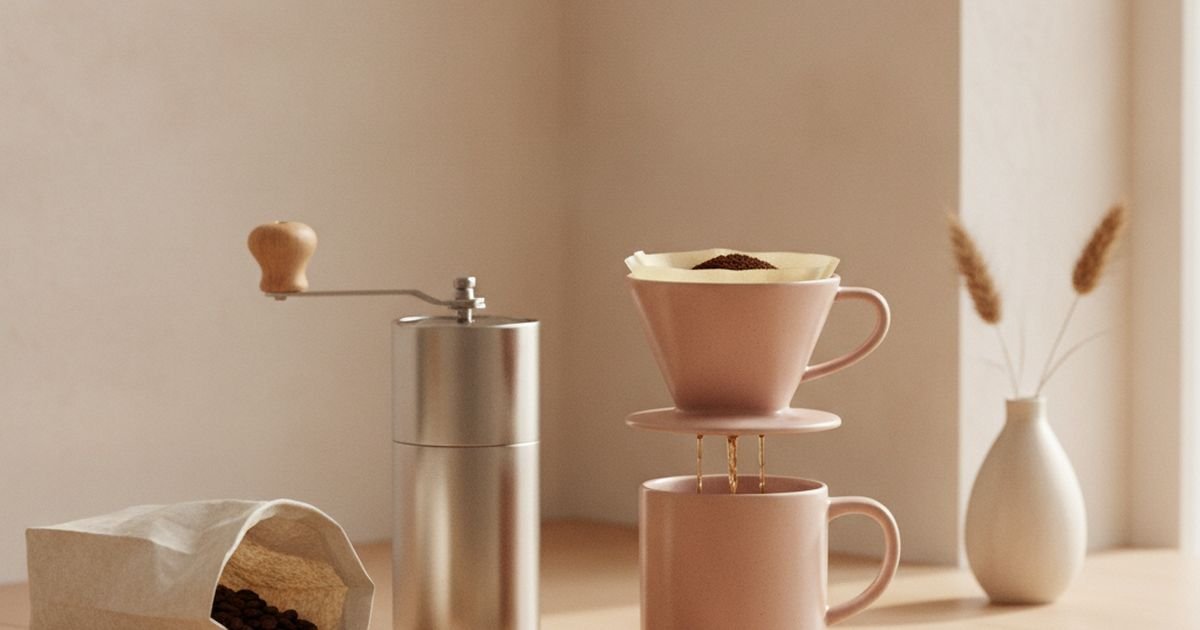
The V60 is the cheapest way to make genuinely excellent coffee, and it is the brewer most specialty cafés hand you when you order filter. The cone shape and spiral ribs let you steer the brew with how you pour, which means it rewards attention — and punishes carelessness, so it has a real learning curve. Give it two weekends. Once you have a routine, it produces a cleaner, sweeter, more articulate cup than any drip machine under a few hundred dollars, and the whole setup fits in a drawer.
$25–40Trade-off: Technique matters — early cups will be inconsistent
Why it is here
- Outstanding cup quality for the price
- Packs down small, nothing to break
- Filters and spares are cheap and everywhere
Worth knowing
- Technique matters — early cups will be inconsistent
- Makes one or two cups at a time, not a pot
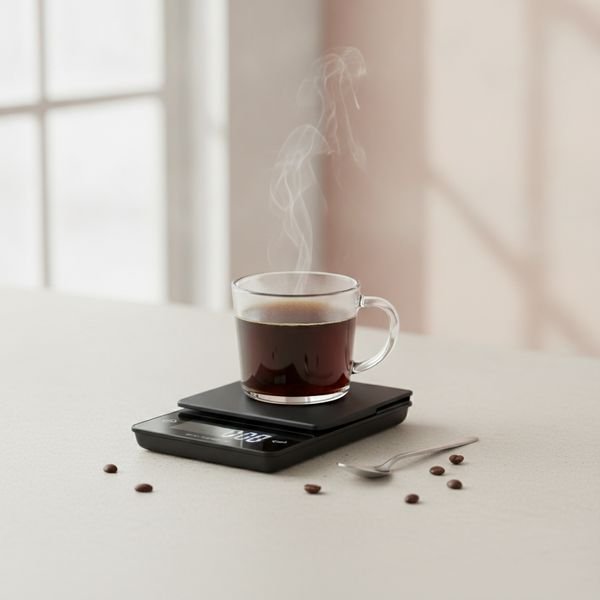
04 · Best value scaleTimemore Black Mirror Basic 2 scale
A scale is what turns a lucky cup into a repeatable one. Coffee is a ratio — grams of coffee to grams of water — and eyeballing scoops introduces enough variance to explain most day-to-day inconsistency. The Black Mirror reads to 0.1g, responds fast enough to pour against, and has a built-in timer so you are not juggling your phone mid-brew. Any 0.1g kitchen scale will do the job; this one is simply the one that feels good to use every morning, which matters more than the spec sheet for something you touch daily.
$45–65Trade-off: Micro-USB charging on some units
Why it is here
- 0.1g resolution with a fast, stable response
- Built-in brew timer
- Slim enough to live under the dripper
Worth knowing
- Micro-USB charging on some units
- Not waterproof — wipe spills quickly
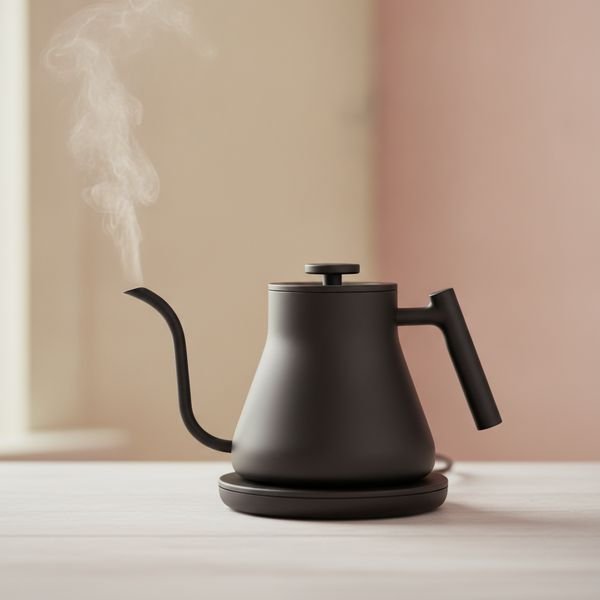
05 · Best gooseneckFellow Stagg EKG electric kettle
A gooseneck spout gives you a slow, aimable stream, which is the whole game in pour-over — you want to wet the bed evenly rather than blast a hole through it. Variable temperature control matters too: lighter roasts open up near boiling, darker roasts turn harsh there. The Stagg EKG is the nicest object in this category, with a counterweighted handle and a genuinely precise pour. It is also expensive for a kettle, and a $40 stovetop gooseneck plus a thermometer gets you most of the way. Buy this one because you want it on your counter, not because the coffee demands it.
$150–195Trade-off: Expensive for what it fundamentally does
Why it is here
- Precise, controllable pour
- Set-and-hold temperature to the degree
- Genuinely handsome on a counter
Worth knowing
- Expensive for what it fundamentally does
- 1L capacity is tight for a full carafe
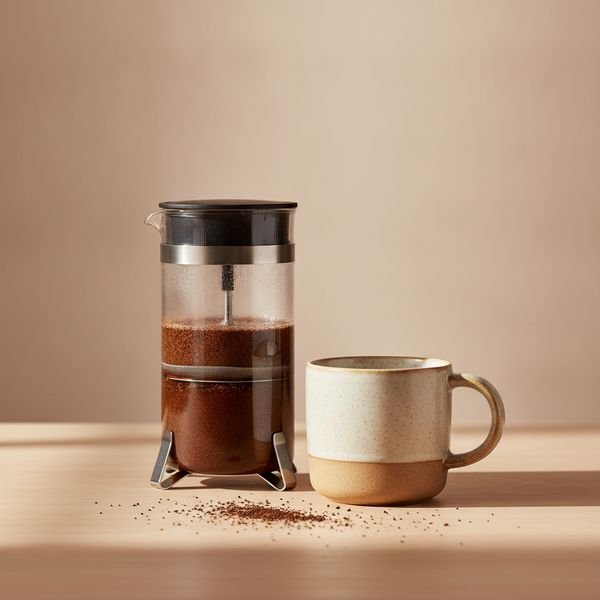
06 · Best for travel and small kitchensAeroPress Original
The AeroPress is close to unbreakable, brews in about two minutes, and cleans up by popping a puck into the bin — which is why it ends up in so many suitcases and office drawers. Immersion plus pressure makes it very forgiving of grind inconsistency, so it is the brewer that will still make you a decent cup on a hotel kettle with whatever beans you could find. It also has an unusually inventive owner community, and there are decades of published recipes to work through if you enjoy that sort of thing.
$35–45Trade-off: Single serving only
Why it is here
- Extremely durable and light
- Very forgiving of grind and technique
- Fast to brew and faster to clean
Worth knowing
- Single serving only
- Paper filters are a consumable you must restock
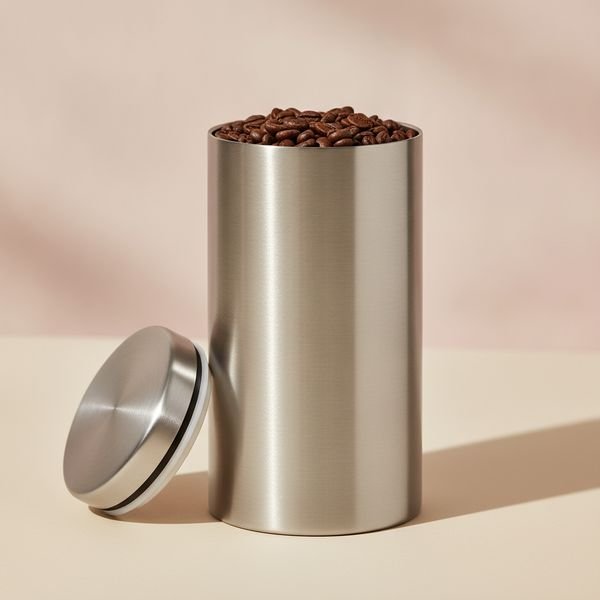
07 · Best way to protect the beansAirscape or Fellow Atmos storage canister
Oxygen is what stales coffee, and a bag rolled shut with a clip is full of it. These canisters work by removing the headspace — the Airscape with a plunger lid you press down, the Atmos with a twist that pulls a partial vacuum. Either approach buys you a meaningfully longer good window, roughly doubling the time a bag stays bright. It is a small, cheap intervention that protects the money you just spent on fresh beans, which is the only reason it earns a slot ahead of more exciting hardware.
$25–45Trade-off: Only worth it if you are buying fresh beans
Why it is here
- Roughly doubles the window beans stay fresh
- Blocks light as well as air
- One-time purchase, nothing to replace
Worth knowing
- Only worth it if you are buying fresh beans
- Vacuum models add moving parts that can wear
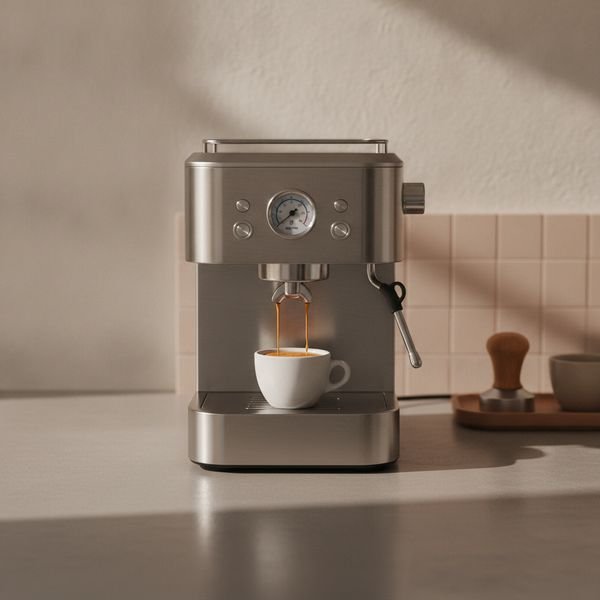
08 · Best entry espresso machineBreville Bambino Plus
Espresso is the expensive end of this hobby and the least forgiving, which is why it sits here rather than at the top. The Bambino Plus earns its place by heating up in about three seconds, holding temperature properly, and including an automatic steam wand that produces genuinely good microfoam without practice. Two honest warnings: the machine is only half the cost, because espresso demands a much finer and more consistent grind than filter, so budget for a capable espresso grinder alongside it. And if you mainly drink milk-based coffee, a good filter setup plus a separate frother will cost far less and disappoint you less.
$420–500Trade-off: Needs an espresso-capable grinder — a large hidden cost
Why it is here
- Three-second heat-up, holds temperature well
- Automatic steam wand makes reliable microfoam
- Small footprint for a real espresso machine
Worth knowing
- Needs an espresso-capable grinder — a large hidden cost
- Small water tank, plastic housing at this price
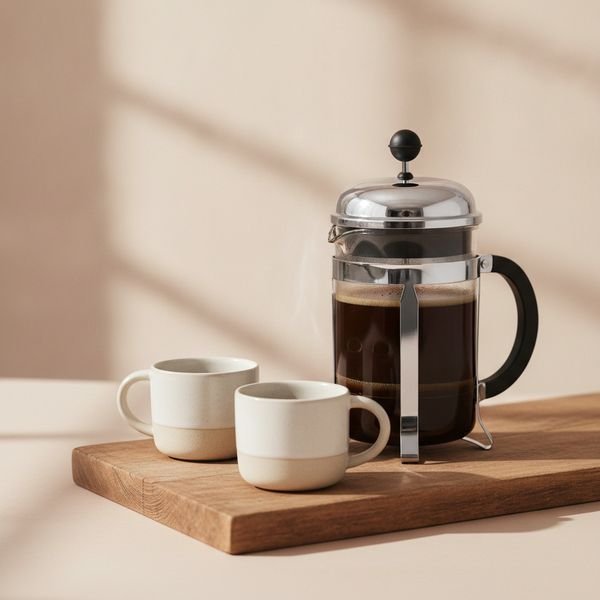
09 · Best for making a potBodum Chambord French press
Full immersion is the most forgiving brew method there is: coffee sits in water for four minutes, and small errors in grind or timing barely register. It also keeps the coffee oils that paper filters trap, giving a heavier, rounder cup — better with dark roasts and milk, less flattering to delicate light roasts. The Chambord is the classic for a reason, and unlike most of this list it makes enough for a table of people at once. Decant it as soon as you plunge, though, or it keeps extracting and turns bitter.
$30–45Trade-off: Sediment in the cup — not everyone likes it
Why it is here
- Almost impossible to get badly wrong
- Serves several people at once
- No paper filters to buy
Worth knowing
- Sediment in the cup — not everyone likes it
- Glass carafe is genuinely fragile
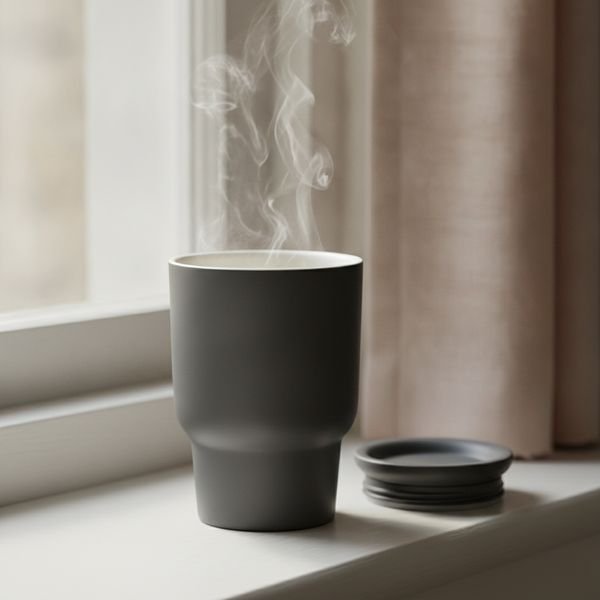
10 · Best for the commuteInsulated ceramic-lined travel mug
Bare stainless steel gives hot coffee a faint metallic edge that gets more noticeable the longer it sits. A ceramic or enamel liner avoids it entirely, so the last mouthful tastes like the first — which is the whole point of carrying it. Prioritise a genuinely leakproof lid you can dismantle and wash, because the gasket is where these go bad. Many chains still discount a refill for bringing your own cup, so a decent mug tends to pay for itself over a few months of commuting.
$25–45Trade-off: Ceramic liners chip if you drop it
Why it is here
- No metallic aftertaste
- Keeps coffee hot for hours
- Often earns a refill discount
Worth knowing
- Ceramic liners chip if you drop it
- Heavier than a plain steel tumbler
Common questions
If I can only afford one upgrade, what should it be?
A burr grinder, every time. Grind consistency sets the ceiling on everything downstream — a good grinder with a cheap brewer beats an expensive brewer with a bad grinder, and it is not close.
Is an expensive gooseneck kettle actually necessary?
For pour-over the gooseneck spout genuinely helps; the electronics are a luxury. A stovetop gooseneck and a cheap thermometer get you most of the result for a quarter of the price.
How long do beans actually stay good?
Roughly three to four weeks past the roast date for filter, a little longer for espresso, if they are stored whole and airtight. Ground coffee starts fading within days.
Should I buy an espresso machine or a pour-over setup?
If you drink long black coffee, pour-over wins on cost and cup quality by a wide margin. Buy espresso only if you specifically want short shots and milk drinks, and budget for the grinder as part of the machine.
Today's deals
See what is discounted right now.
Deals →← All guides
As an AliExpress affiliate we earn from qualifying purchases. Prices and availability are accurate as of the date of publication and may change.